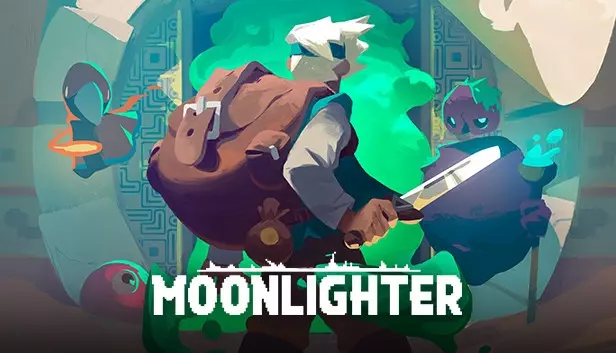
Moonlighter represents a masterful fusion of two seemingly disparate genres, successfully marrying the high stakes tension of an action rogue-lite dungeon crawler with the meticulous strategic calculations of a business simulation game. Developed by Digital Sun, this title invites players into the quiet, rustic village of Rynoka, a commercial hub built around a series of ancient, mysterious archaeological excavations known simply as the Gates. The narrative centers on Will, an orphaned shopkeeper who inherits The Moonlighter, a historic retail establishment that has fallen on hard times. While the rest of the village views the hazardous dungeons as a mere source of commodities to be extracted for survival, Will harbors a romantic, deeply burning ambition to become a true hero, driven by a desire to conquer the legendary fifth door that has remained sealed for generations.
To realize this dream, Will must lead a dual existence, balancing the dangerous realities of nighttime exploration with the commercial responsibilities of daytime retail management. The game operates on a beautifully structured gameplay loop where every action directly feeds into, and supports, its counterpart. The treasures ripped from the clutches of monsters in the deep, dark corners of the dimensions are the very same goods that line the shelves of Will’s storefront during the day. Managing the wealth generated from these sales becomes the central mechanical pillar of the experience, as gold is the primary catalyst for all forms of progression. Without a thriving business, Will cannot afford the advanced weaponry, sturdy armor, or mystical enchantments required to survive the increasingly hostile environments found within the subterranean realms.
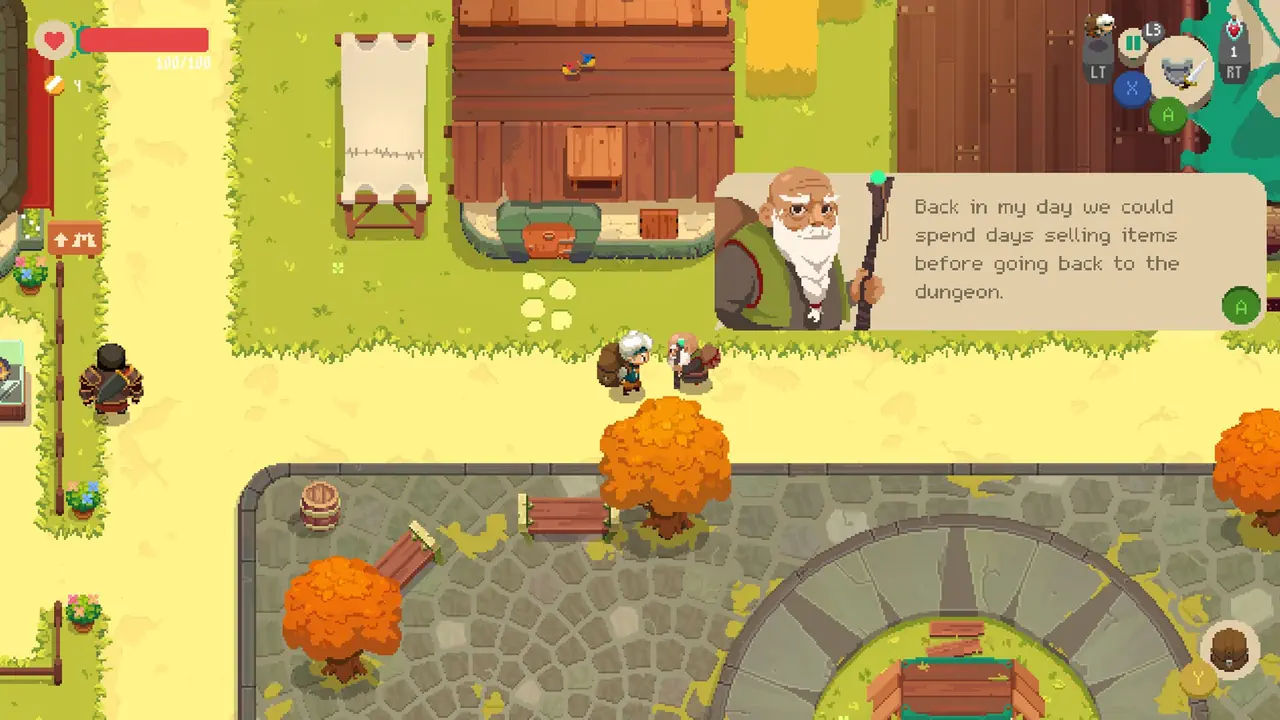
The structural foundation of Moonlighter relies on procedurally generated environments, a design choice that ensures no two expeditions into the magical gates feel identical. Each time Will steps through a portal, the layout of the floors, the distribution of enemies, the placement of traps, and the contents of treasure chests are completely randomized. This unpredictability demands constant vigilance, adaptability, and mastery over the core combat mechanics. Players are pitted against a massive variety of bizarre creatures, ranging from animated crystalline constructs to predatory flora, culminating in spectacular, punishing boss battles that guard the transition to each subsequent dimension. Through it all, the humble shop remains the anchor of the narrative and gameplay, transforming a traditional story of heroic conquest into an intimate, grounded tale about community, commerce, and personal ambition.
The Strategic Dynamics of Shopkeeping
The art of retail management in Moonlighter is significantly more complex than simply placing items on a counter and waiting for customers to hand over their currency. When Will opens the doors of The Moonlighter each morning, he must act as an active, observant merchant who understands the nuances of supply and demand. Every piece of loot brought back from the dungeons, whether it is a common Industrial Piece, a rare Golem Core, or a piece of ancient Crystalline Energy, possesses a fluid market value that the player must discover through trial and error. Setting the price of an item initiates a psychological guessing game with the citizens of Rynoka, who express their feelings toward Will’s pricing strategy through distinct emotional reactions displayed as bubbles above their heads.
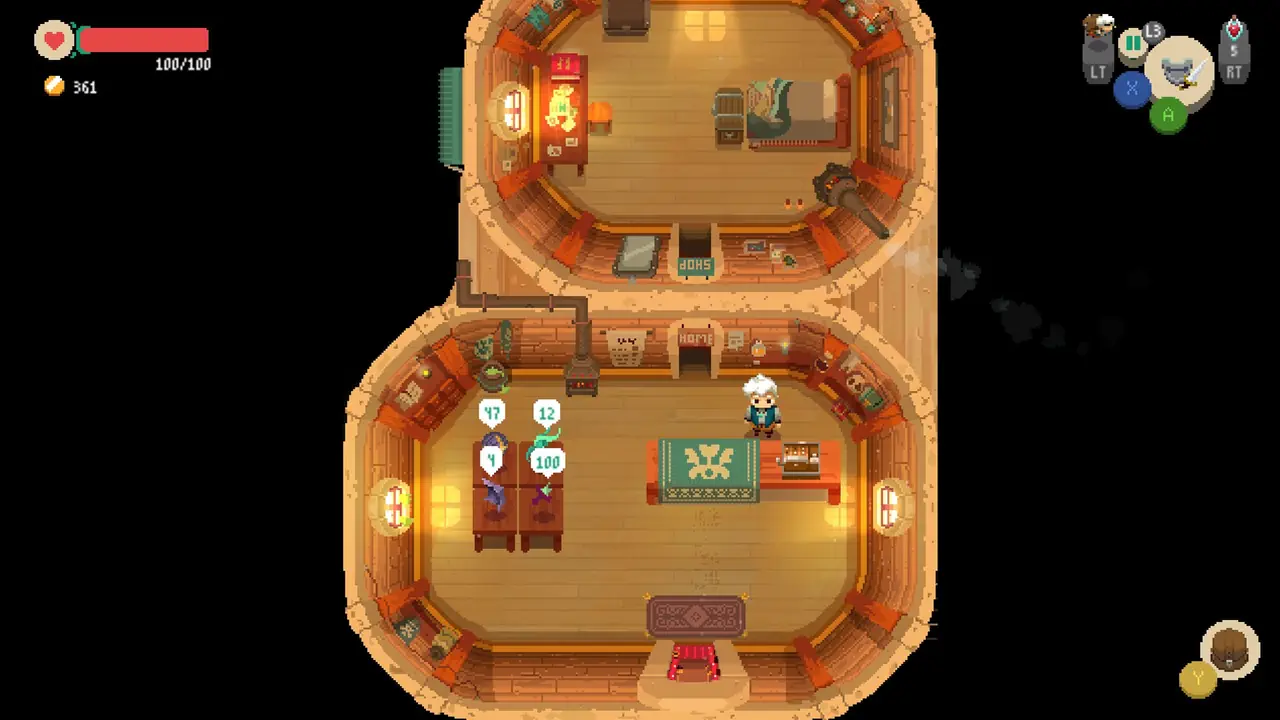
If an item is priced too high, customers will look at it with open dismay, leaving it on the shelf and lowering the overall foot traffic and reputation of the store. Conversely, if an item is priced too low, customers will enthusiastically snap it up instantly, resulting in immediate sales but leaving Will with a massive deficit in potential profit. The sweet spot is a price that satisfies the consumer while maximizing the financial return for the shop, a delicate equilibrium that requires constant adjustment based on market saturation. If Will floods the local market with a specific type of resource, the demand for that item will plummet, forcing the player to artificially restrict the supply or store the items away until the local economy stabilizes.
As the business grows, the complexities of shopkeeping expand to include security and infrastructure. Not all visitors to The Moonlighter are honest patrons, as various shady individuals, thieves, and pickpockets will occasionally enter the establishment with the intent of stealing high-value wares. Will must keep a watchful eye on his customers while managing the register, physically tackling criminals before they can escape through the front door with unpaid merchandise. Furthermore, the hard-earned gold accumulated from successful business days can be reinvested into upgrading the shop itself. These upgrades include expanding the physical floor space to accommodate more display tables, purchasing luxurious showcases that increase the tips customers leave, buying more secure counters to deter thieves, and acquiring decorative items that grant passive bonuses, such as increasing customer speed or attracting wealthy big-spenders to the village.
Martial Arts and Tactical Combat Mechanics
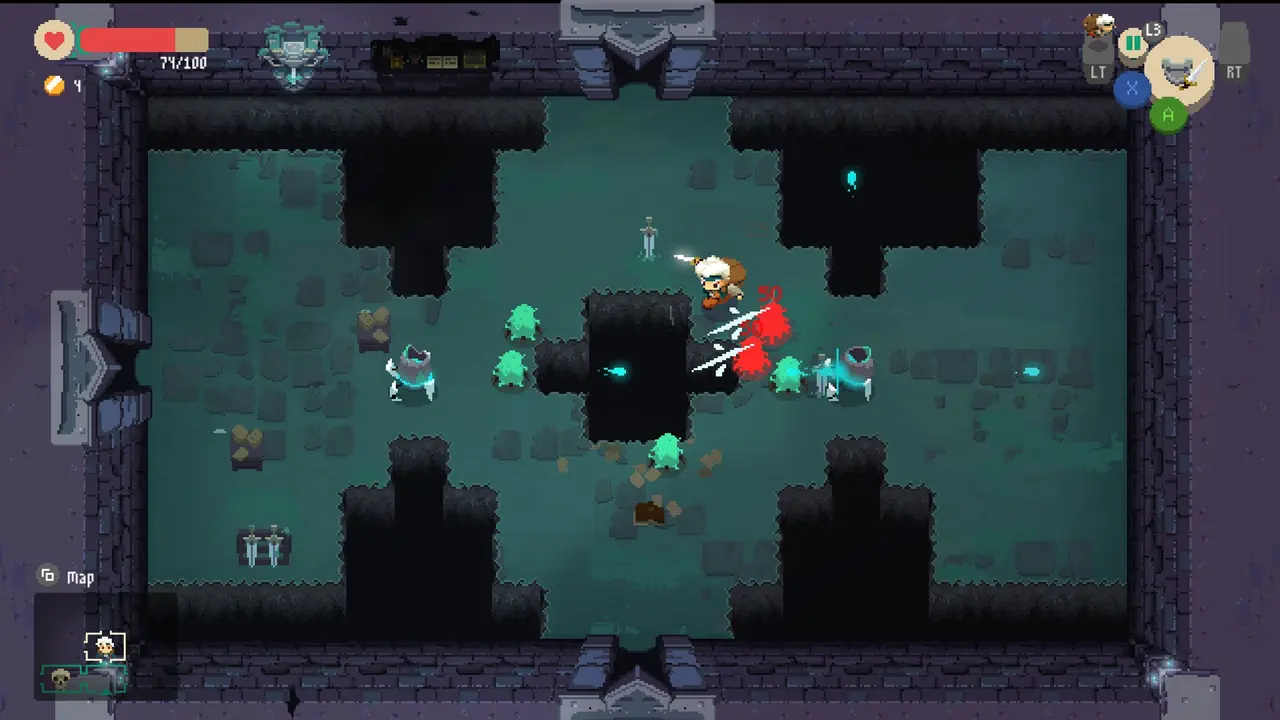
When the sun sets over Rynoka, the economic simulation gives way to intense, real-time action combat that demands precision, timing, and environmental awareness. Will has access to a versatile arsenal of five distinct weapon classes, each offering a radically different playstyle and tactical utility. The Short Sword and Shield combination provides a balanced approach, offering rapid, close-range strikes alongside a reliable defensive block that can absorb incoming damage. For players who prefer overwhelming force, the Big Sword delivers massive, sweeping attacks that can cleave through multiple enemies simultaneously, accompanied by a powerful charged attack that grants temporary invincibility frames during its execution.
The Spear offers a highly defensive, linear style of engagement, allowing Will to keep dangerous enemies at a safe distance by thrusting through narrow corridors and across small environmental chasms. The Blades, or combat gloves, represent the fastest weapon class available, enabling extremely rapid combinations and high agility, though they require Will to operate in absolute proximity to lethal threats. Finally, the Bow provides the only dedicated ranged option, allowing players to pick off targets from afar and charge up piercing shots, which is invaluable during chaotic encounters where closing the distance is too risky. Will can equip two weapons simultaneously, allowing players to seamlessly swap between different combat styles on the fly to answer the specific challenges presented by varying enemy formations.
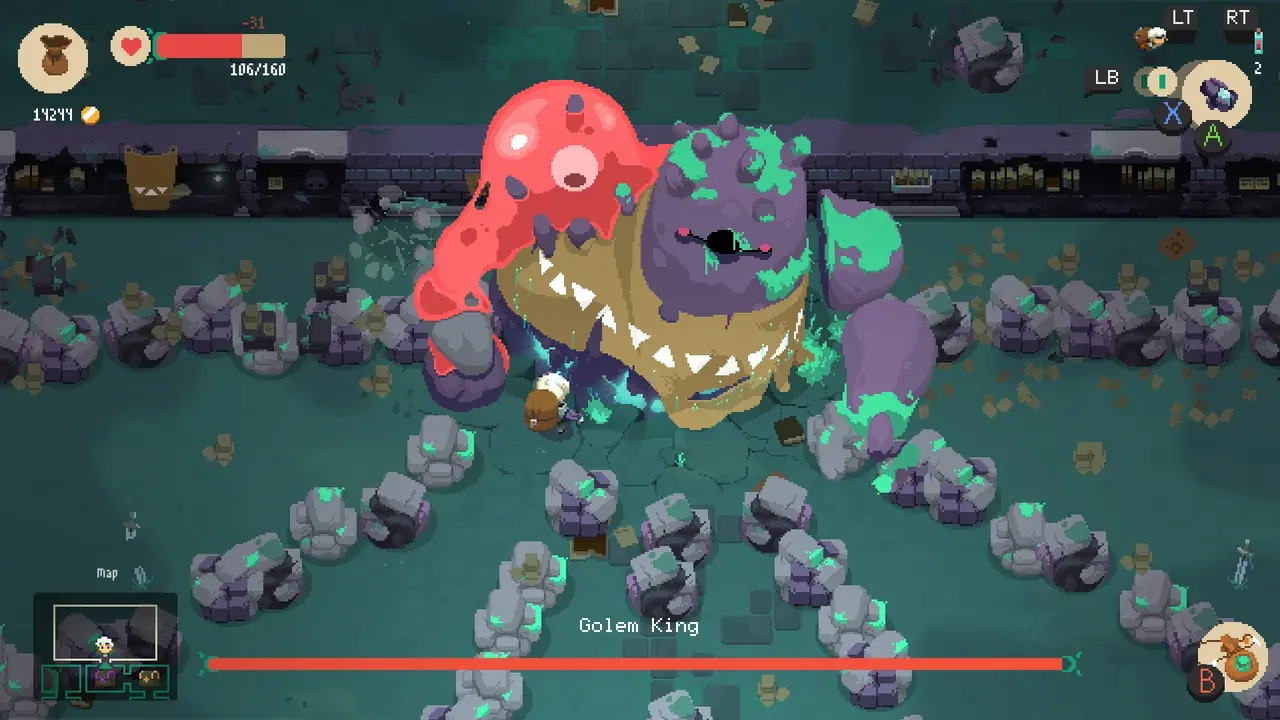
Survival within the dungeons depends heavily on mastering the dodge roll, a fundamental maneuver that allows Will to move swiftly through enemy attacks, bypass hazardous terrain traps, and cross broken pathways. Every enemy type possesses distinct telegraphs, attack patterns, and behavioral quirks that must be studied and memorized. From the jumping slimes of the opening floors to the advanced, projectile-firing automatons of the deeper sectors, combat is an intricate dance of positioning and patience. This tactical depth reaches its peak during the cinematic boss encounters, where colossal guardians test the player’s mechanical limits, requiring a flawless combination of weapon mastery, item consumption, and perfect execution of movement mechanics to secure the rare, incredibly lucrative historical artifacts they leave behind.
The Spatial Puzzle of Inventory Management
One of the most innovative and celebrated mechanics in Moonlighter is its unique approach to inventory management, which elevates the act of carrying loot into a compelling, high-stakes spatial puzzle. Will’s backpack has a strictly limited number of slots, meaning that hoarding every single piece of junk dropped by vanquished foes is an mathematical impossibility. This limitation is magnified by the introduction of inventory curses, which are specific structural restrictions placed on items found within special treasure chests. These curses require players to carefully consider the geometric placement of items within their bag, transforming a simple list of resources into a dynamic logistical challenge.
Some cursed items feature directional arrows that dictate where they can safely reside without causing harm to Will’s other possessions. A curse might dictate that the item will automatically destroy whatever artifact is placed immediately to its left, or it might permanently transmute the item below it into a random piece of common material upon returning to town. Other curses are less destructive but equally restrictive, such as items that can only be placed on the top or bottom rows of the backpack, items that are too fragile to survive a heavy blow and will break if Will takes too much damage, or items whose identities remain entirely hidden until they are successfully brought back to the safety of Rynoka.
This system forces players into a constant state of evaluation, weighing the monetary value of a clean item against the logistical nightmare of a highly valuable but severely cursed artifact. To alleviate this tension, the game introduces the Catalyst Mirror, a mystical handheld artifact that allows Will to sacrifice unwanted items on the spot, transmuting them directly into gold while still inside the dungeon. However, the mirror only yields a small fraction of the item’s true market value, creating a brilliant risk-versus-reward dynamic. Players must constantly ask themselves whether they should throw away common resources to make room for rare artifacts, use the mirror for immediate pocket change, or risk their lives pushing deeper into the dungeon floors to find a way to break the curses before returning to civilization.
Municipal Investment and Town Restoration
The progression system of Moonlighter extends far beyond Will’s personal strength and individual bank account, as the revitalization of Rynoka itself is directly tied to the player’s financial success. When the game begins, the village is a ghost town, a faded shadow of its former glory that has been abandoned by merchants and travelers due to the extreme danger of the local excavations. By investing substantial sums of gold into the town’s development board, Will can personally fund the relocation of various talented entrepreneurs and artisans to the area, transforming the sleepy hamlet into a bustling, self-sustaining economic ecosystem.
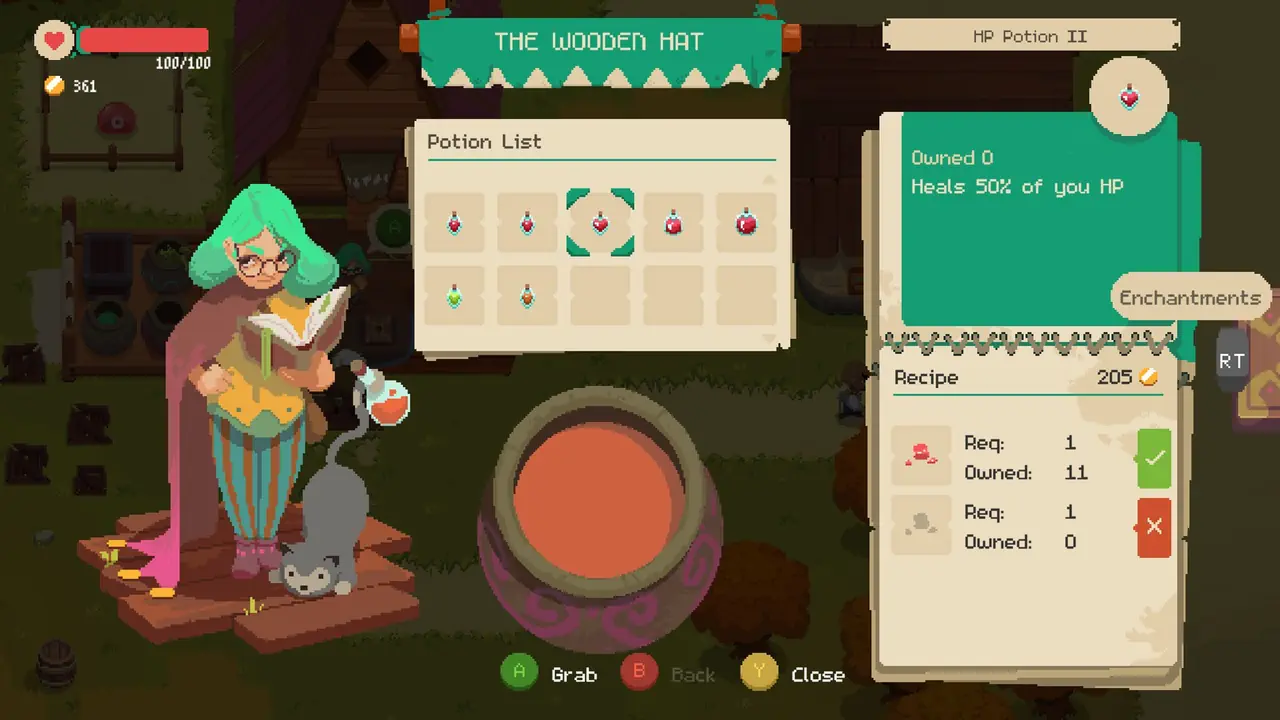
The first and most critical ally to recruit is Andrei, the master blacksmith who establishes the Vulcan Forge. Andrei is the sole individual capable of refining raw dungeon materials into powerful armaments, presenting Will with complex branching upgrade paths for his weaponry, which allow him to choose between raw physical damage or elemental enhancements such as stun, poison, and fire effects. Andrei also crafts Will’s defensive gear, offering a choice between lightweight fabric armor that increases movement speed, medium iron armor that offers balanced protection, and heavy steel plate armor that maximizes health and defense at the expense of agility. Following the blacksmith, players can fund The Wooden Hat, an apothecary run by a witch named Eris, who concocts essential health potions and applies powerful enchantments to existing weapons and armor to boost their baseline statistics.
As the town expands, additional figures arrive to offer specialized services that deepen the strategic options available to the player. The Retailer sets up a competing shop that sells basic dungeon materials at an incredibly high premium, offering a convenient alternative for players who need a single specific resource to finish crafting a high-tier sword but wish to avoid embarking on an entire dungeon run to find it. The Banker introduces a high-stakes investment mechanic, allowing Will to deposit large sums of gold in hopes of earning massive interest returns based on fluctuating market trends, though poor timing can result in significant financial losses. This system of municipal growth ensures that every successful sale at The Moonlighter directly contributes to the macro-progression of the world, fostering a deep sense of connection between Will and the quirky community he is fighting to rebuild.
Ecological Companions and Familiar Research
The unpredictable nature of the interdimensional gates becomes slightly more manageable through the introduction of the familiar system, which allows Will to cultivate helpful companions derived from the very ecology he explores. By discovering rare monster eggs hidden within deep dungeon structures, or by defeating specific enemy types a designated number of times, players can bring these biological specimens back to the farm enclosure located right next to Will’s home. Once hatched, these miniature versions of dungeon monsters can accompany Will on his dangerous expeditions, providing unique passive benefits and active combat support that can completely alter the dynamics of a dungeon crawl.
Each companion familiar possesses distinct behavioral traits that complement different playstyles and tactical needs. Some familiars act as aggressive combatants, actively seeking out targets to inflict consistent physical damage, apply status ailments like poison, or distract dangerous foes during complex boss fights. Other companions focus entirely on utility and resource management; for example, certain familiars can fly across dangerous chasms to retrieve dropped loot that Will cannot physically reach, while others act as walking storage extensions, offering a few additional curse-free inventory slots to help alleviate the strict space limitations of the standard backpack. There are even defensive familiars capable of generating temporary shields to absorb incoming projectiles or dropping small healing items during prolonged encounters, providing a vital safety net that can mean the difference between a successful escape and losing an entire night’s worth of valuable treasure.
Final Thoughts
Moonlighter succeeds beautifully because it transforms the repetitive nature of the rogue-lite genre into a meaningful, deeply rewarding loop where every single loop of combat and commerce directly empowers the other. The brilliant combination of unpredictable, challenging dungeon exploration and nuanced, reactive shop management creates an addictive rhythm that keeps players thoroughly engaged from their first simple sales to their final, epic confrontations. By anchoring the grand, dangerous journey of a hero within the cozy, intimate realities of a local village store, the game delivers an exceptionally charming and unforgettable adventure that brilliantly celebrates both the thrill of exploration and the satisfying rewards of hard work.
How do you plan to balance your time between maximizing your shop’s daily profits and braving the deeper floors of the dungeons?
What you need to run
Minimum System Requirements
| Component | Specification |
|---|---|
| OS | Windows 7 64-bit |
| Processor | Intel Core i5-2300 / AMD A8-7600 |
| Memory | 4 GB RAM |
| Graphics | GeForce GTX 660 / Radeon RX 460 |
| Storage | 3 GB available space |
Recommended System Requirements
| Component | Specification |
|---|---|
| OS | Windows 10 64-bit |
| Processor | Intel Core i5-4590 / AMD Ryzen 5 1500X |
| Memory | 8 GB RAM |
| Graphics | GeForce GTX 1050 / Radeon RX 560 |
| Storage | 3 GB available space |
Have fun!