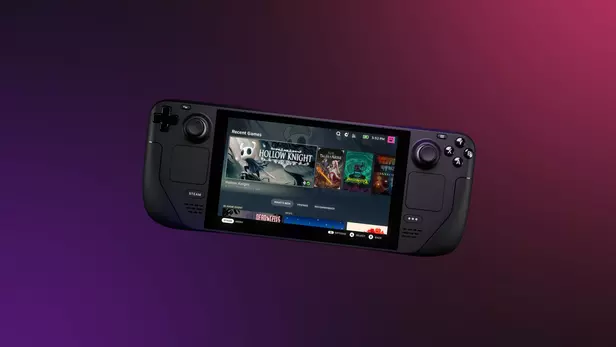
The Steam Deck OLED represents a comprehensive internal and external revision of the original handheld hardware, optimizing performance per watt, display fidelity, and long-term repairability.
Steam Deck OLED: An Architectural and Technical Deep Dive
The Display Masterclass: Custom HDR OLED Integration
The defining feature of this model is the transition from a traditional liquid crystal display to a custom HDR OLED panel manufactured by Samsung, which fundamentally transforms the visual presentation of interactive media.
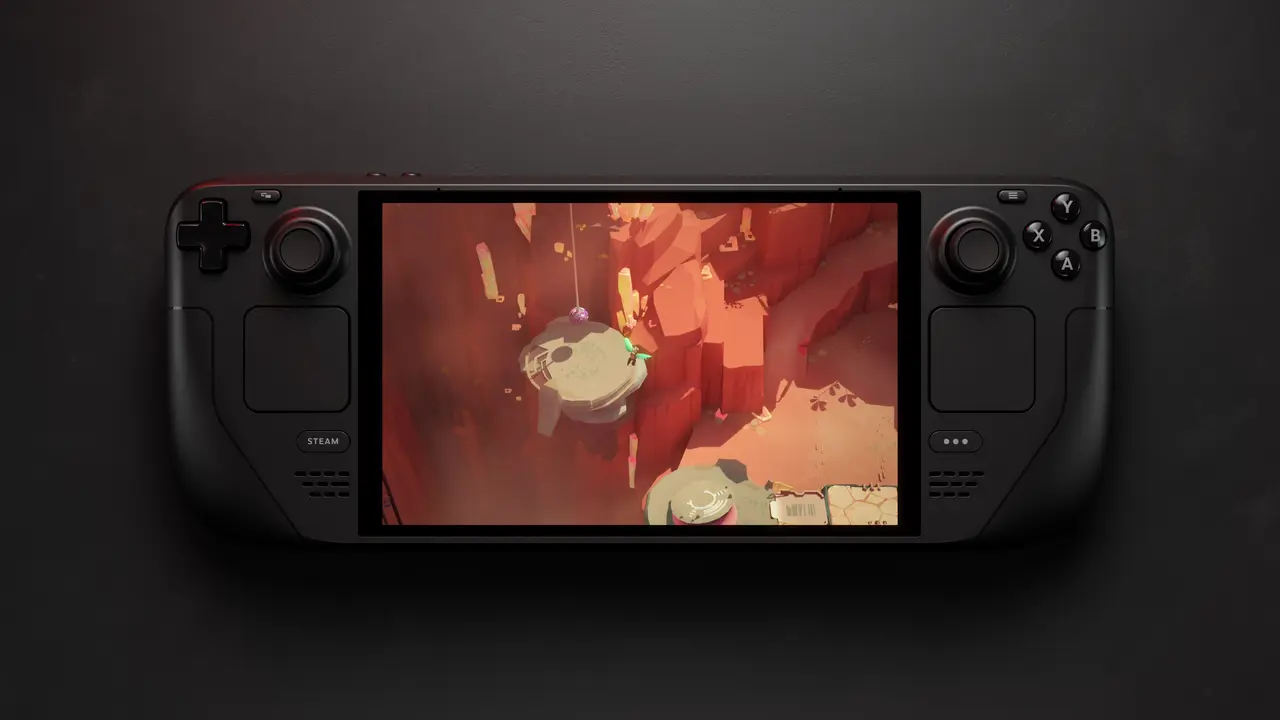
- The active screen real estate has expanded to a 7.4-inch diagonal profile, achieved by shrinking the surrounding bezels while maintaining the physical footprint of the chassis;
- The panel operates at a native resolution of 1280 x 800 pixels, utilizing an active matrix organic light-emitting diode structure that provides a contrast ratio approaching infinity to one;
- Color accuracy receives a massive upgrade, covering 110% of the DCI-P3 color gamut, which ensures vibrant, accurate color reproduction for modern games;
- Peak brightness has risen dramatically to 1000 nits when rendering High Dynamic Range content, while standard dynamic range content peaks at a robust 600 nits;
- The refresh rate has been elevated to 90Hz, reducing frame presentation times to 11.1 milliseconds and lowering overall input latency;
- Touch responsiveness is enhanced via an upgraded 180Hz touchscreen polling rate, which greatly reduces latency during on-screen typing or strategy game manipulation.

Silicon Architecture and Memory Subsystem Efficiency
Beneath the display, the internal architecture has undergone a significant fabrication node shrink, maximizing thermal efficiency and data throughput without altering the baseline performance profile of the games.
- The custom AMD APU, codenamed Sephiroth, is built on a highly efficient 6nm process node, which is a shrink from the original 7nm Aerith processor;
- While the compute unit count remains identical at 4 Zen 2 CPU cores and 8 RDNA 2 graphics compute units, the die shrink yields a significant reduction in power consumption;
- The system memory has been upgraded to 6400 MT/s LPDDR5, which increases total memory bandwidth from 88 GB/s to 102.4 GB/s;
- This speed increase reduces latency and alleviates bottlenecks for the unified memory architecture, resulting in smoother frame pacing and fewer micro-stutters;
- Advanced power management firmware optimizes sleep states, which reduces parasitic battery drain when the system is inactive.
Thermal Dynamics and Acoustic Optimization
To support the revised silicon, the internal thermal management system has been completely re-engineered to deliver quieter operation under maximum workloads.
- The internal thermal module features a thicker heat pipe and an expanded copper heatsink assembly, which dissipates heat away from the APU more rapidly;
- The cooling fan features a larger blade profile, which allows the system to move a higher volume of air at lower rotational speeds;
- As a direct result of these thermal optimizations, the device runs cooler to the touch and operates at a significantly lower acoustic decibel level during sustained gameplay sessions;
- The physical weight of the entire unit has been reduced to approximately 640 grams, representing a 5% weight reduction made possible by the lighter, thinner OLED display assembly.

Battery Chemistry and Charging Metrics
Battery performance has seen a substantial upgrade, addressing one of the primary limitations of the first-generation handheld hardware.
- The physical capacity of the battery has been increased from 40Wh to a 50Wh lithium-ion pack, fitting within the same physical space due to internal layout optimization;
- Due to the combined efficiency gains of the 6nm silicon and the lower power draw of the OLED panel, real-world battery life has increased by 30% to 50%;
- The battery chemistry has been adjusted to support faster charging cycles, allowing the device to charge from 20% to 80% capacity in approximately 45 minutes;
- The charging cable length has been extended from 1.5 meters to 2.5 meters, giving players greater physical freedom while playing plugged into a wall outlet;
- The diagnostic charging light has been replaced with a WRGB LED, which provides clear visual feedback regarding power delivery and battery charge status.
Wireless Connectivity and Input Innovations
The wireless subsystems and input mechanisms have been thoroughly revised to support lower latency and better peripheral ecosystem integration.
- A new WiFi 6E module unlocks access to the 6 GHz wireless spectrum, expanding bandwidth and reducing network congestion;
- Download speeds are up to 3 times faster than the previous generation, assuming a compatible router is utilized by the user;
- The integration of Bluetooth 5.3 adds native support for high-fidelity and low-latency audio codecs, including aptX HD and aptX Low Latency;
- A dedicated third Bluetooth antenna is positioned near the top of the device, which ensures strong signal propagation to wireless controllers when the device is docked;
- System firmware now supports a wake from Bluetooth feature, allowing players to power on the device using a wireless controller from across the room.

Ergonomics, Controls, and Haptic Fidelity
The physical interfaces have been subtly modified to increase durability, comfort, and input precision during long gaming sessions.
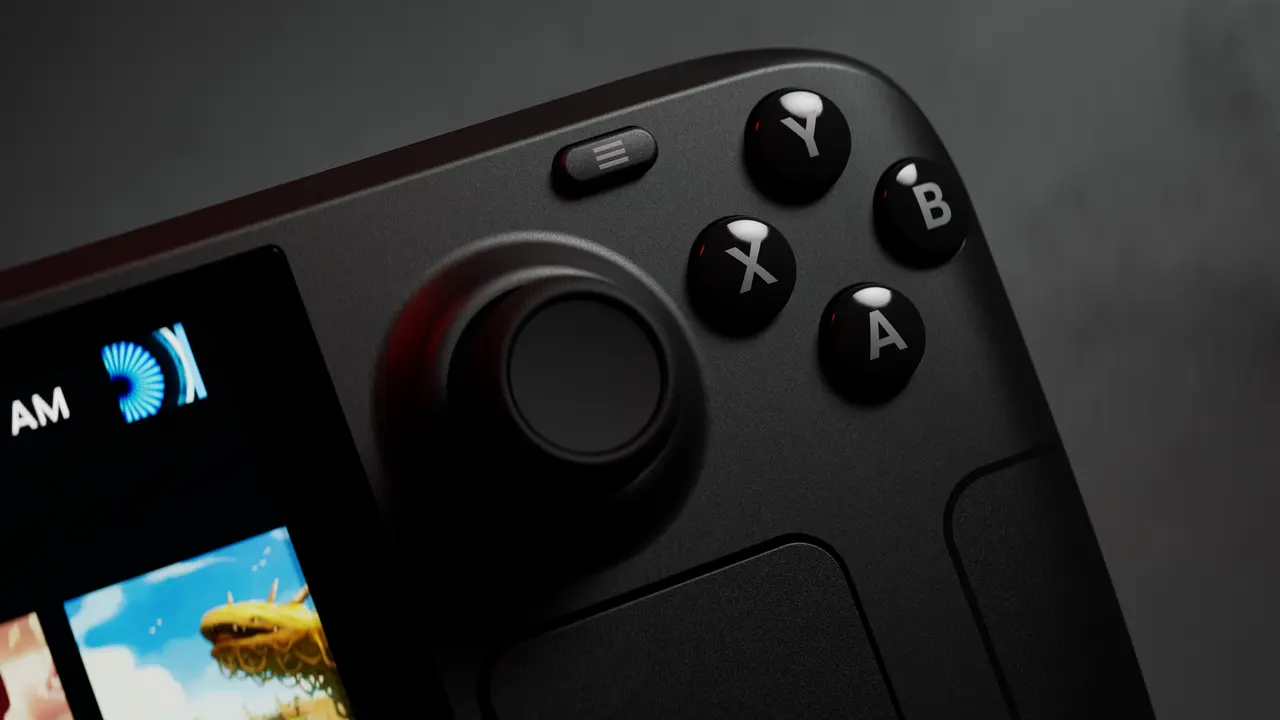
- The analog sticks feature a revised top material and a deeper cup geometry, which increases thumb grip and prevents the accumulation of skin oils and dust;
- The analog stick posts are constructed from a harder material, which reduces friction wear against the front housing shell and eliminates plastic powder buildup;
- The capacitive touch sensors inside the analog stick tops feature improved reliability, which ensures accurate detection for gyro-aiming activation;
- The shoulder bumper switches have been completely redesigned with improved mechanical switches, which increases structural reliability when the device is dropped;
- The D-pad snap ratio has been tuned, which provides clearer tactile feedback and more predictable diagonal inputs for fighting games;
- The dual trackpads feature a complete mechanical overhaul, which provides superior edge detection, higher fidelity, and crisp haptic feedback via redesigned linear resonant actuators.
Audio and Microphonic Upgrades
The soundstage of the handheld device has been broadened to offer a more convincing acoustic environment without external audio gear.
- The dual front-firing stereo speakers benefit from an improved bass response, which flattens the frequency response profile and provides richer low-end sound;
- The onboard DSP, or digital signal processor, handles spatial separation with higher clarity, making it easier to pinpoint directional audio cues;
- The onboard dual microphone array can now be utilized simultaneously with the 3.5mm hardware audio jack, resolving a limitation where plugging in headphones disabled the internal microphones.
Modular Engineering and Enhanced Repairability
Valve has prioritized hardware longevity by reworking the internal structure to cater to the repair and modification communities.
- The rear shell screws have been upgraded to Torx T6 machine screws, which thread into durable metal inserts molded directly into the front plastic frame;
- This engineering choice mitigates the risk of stripping plastic threads or screw heads during routine maintenance or storage upgrades;
- The internal architecture reduces the total number of distinct screw types used throughout the system, simplifying the reassembly process;
- The mechanical bumper switches have been moved from the main motherboard onto the joystick daughterboards, which ensures that a broken bumper switch can be repaired without replacing the expensive primary circuit board;
- The display assembly can now be replaced without removing the rear cover or extracting the core internal components, which significantly reduces the step count for screen repairs.
SteamOS, Proton, and Ecosystem Architecture
The underlying software ecosystem remains an open, flexible environment that transforms PC gaming into an intuitive, console-like reality.
- The device is powered by SteamOS, an immutable Linux distribution based on Arch Linux that utilizes a read-only root filesystem to ensure system stability;
- Compatibility with Windows-based titles is achieved via Proton, an advanced translation layer that converts DirectX and Vulkan API instructions in real-time;
- The Deck Verified program continuously audits the Steam catalog, categorizing games based on text legibility, controller mapping, and out-of-the-box performance;
- The Fast Suspend and Resume feature writes the volatile memory state to a low-power state almost instantly, allowing users to pause and resume modern AAA games with a single tap of the power button;
- Cloud synchronization ensures that Cloud Saves remain perfectly synchronized between a primary desktop PC and the handheld ecosystem, facilitating seamless hardware switching.
Comprehensive Hardware Specifications Table
| Feature | 512GB OLED Model | 1TB OLED Model |
|---|---|---|
| Storage Configuration | 512GB NVMe PCIe Gen 4 SSD; | 1TB NVMe PCIe Gen 4 SSD; |
| Display Technology | 7.4-inch HDR OLED panel; | 7.4-inch HDR OLED panel with premium anti-glare etched glass; |
| Refresh & Polling Rates | 90Hz refresh rate, 180Hz touch rate; | 90Hz refresh rate, 180Hz touch rate; |
| Silicon Node | 6nm AMD Sephiroth APU; | 6nm AMD Sephiroth APU; |
| Memory Speed | 16GB LPDDR5 at 6400 MT/s; | 16GB LPDDR5 at 6400 MT/s; |
| Wireless Suite | WiFi 6E, Bluetooth 5.3; | WiFi 6E, Bluetooth 5.3; |
| Acoustic Profiling | Dual speakers, upgraded bass response; | Dual speakers, upgraded bass response; |
| Included Accessories | Standard carrying case, power supply; | Carrying case with removable liner, exclusive digital assets. |
Available Hardware Configurations
The hardware is distributed across two primary tier options, which differ in storage capacity, display treatments, and packed accessories.
- 512GB OLED Tier: This model includes a fast 512GB NVMe SSD, a gloss finish 1280 x 800 HDR OLED display, a 45W power supply with an elongated 2.5 meter cable, a standard protective carrying case, and a digital Steam profile bundle;
- 1TB OLED Tier: This flagship model upgrades the internal storage to a 1TB NVMe SSD, implements a premium anti-glare etched glass display surface, provides an exclusive dual-layer carrying case with a removable inner liner, and adds premium digital assets including a unique startup movie and a custom virtual keyboard theme.

Final Thoughts
The Steam Deck OLED is far more than a simple display refresh, it represents a mature, deeply considered re-engineering of mobile PC gaming hardware. By addressing thermal efficiency, physical repairability, and wireless latency alongside the massive visual upgrade of the organic light-emitting diode panel, Valve has created a definitive mid-generation standard for handheld gaming infrastructure.
Full Specs
| Category | Specifications |
|---|---|
| Compute | APU: 6 nm AMD APU CPU: Zen 2 4c/8t, 2.4-3.5GHz (up to 448 GFlops FP32) GPU: 8 RDNA 2 CUs, 1.6GHz (1.6 TFlops FP32) APU Power: 4-15W |
| RAM | 16 GB LPDDR5 on-board RAM (6400 MT/s quad 32-bit channels) |
| Storage | Options: 512GB NVMe SSD / 1TB NVMe SSD Expansion: High-speed microSD card slot |
| Controls and Input | Gamepad Controls: A B X Y buttons, D-pad, L & R analog triggers, L & R bumpers, View & Menu buttons, 4 x assignable grip buttons Thumbsticks: 2 x full-size analog sticks with capacitive touch Haptics: HD haptics Trackpads: 2 x 32.5mm square trackpads with haptic feedback, pressure sensitivity for configurable click strength Gyro: 6-Axis IMU |
| Display | Resolution: 1280 x 800 x RGB Type: HDR OLED Size: 7.4” diagonal Brightness: 1,000 nits peak (HDR) / 600 nits (SDR) Contrast Ratio: > 1,000,000:1 Color Gamut: 110% P3 Refresh Rate: up to 90Hz Response Time: <0.1ms Touch Enabled: High-performance touch |
| Sensors | Dual ambient light sensors (ALS) |
| Connectivity | Bluetooth: 5.3 (support for controllers, accessories, and audio) with a dedicated antenna Wi-Fi: Tri-band Wi-Fi 6E (2.4GHz, 5GHz, 6GHz) 2 x 2 MIMO, IEEE 802.11a/b/g/n/ac/ax |
| Audio | Channels: Stereo with embedded DSP for immersive listening Microphones: Dual microphone array Headphone/Mic Jack: 3.5mm stereo headphone/headset jack Digital: Multichannel audio via DisplayPort over USB-C, standard USB-C, or Bluetooth 5.3 |
| Power | Input: PD3.0 Type C power supply, 45W (2.5m cable) Battery: 50Whr (3-12 hours of gameplay) |
| Expansion | microSD: UHS-I supports SD, SDXC, and SDHC External Connectivity: DisplayPort over Type C; up to 8K @ 60Hz or 4K @ 120Hz, USB3 Gen 2 |
| Size and Weight | Size: 298mm x 117mm x 49mm Weight: Approx. 640 grams |
| Software | Operating System: SteamOS 3 (Arch-based) Desktop: KDE Plasma |
Have fun!