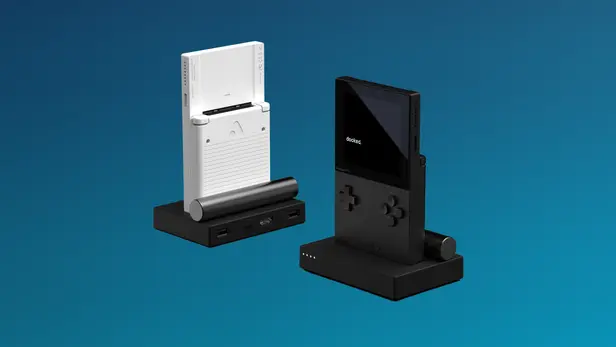
The Analogue Pocket is not merely a modern clone console, it represents an advanced hardware level preservation platform engineered to safeguard video game history. Serving simultaneously as a premium portable handheld capable of running multiple video game systems and a fully fledged digital audio workstation, the device bridges the gap between retro hardware authenticity and modern engineering.
Gaming Compatibility, Hardware Engineering, and openFPGA
At the absolute core of the device is the Altera Cyclone V FPGA chip, which functions fundamentally differently from conventional software emulation. Software emulators run on standard operating systems and translate original console code line by line, which frequently introduces input latency, audio lag, and minor visual inaccuracies. In stark contrast, a Field-Programmable Gate Array is an integrated circuit that can be reconfigured at the transistor level to accurately replicate the physical wiring, electrical timing, and logic circuits of original vintage silicon.
To ensure pristine system management without interfering with game performance, an additional Altera Cyclone 10 FPGA chip operates simultaneously to handle background operations, power distribution, and user interface scaling. This dual chip architecture guarantees that games execute with absolute cycle accuracy, meaning they behave precisely as they would on original physical hardware.
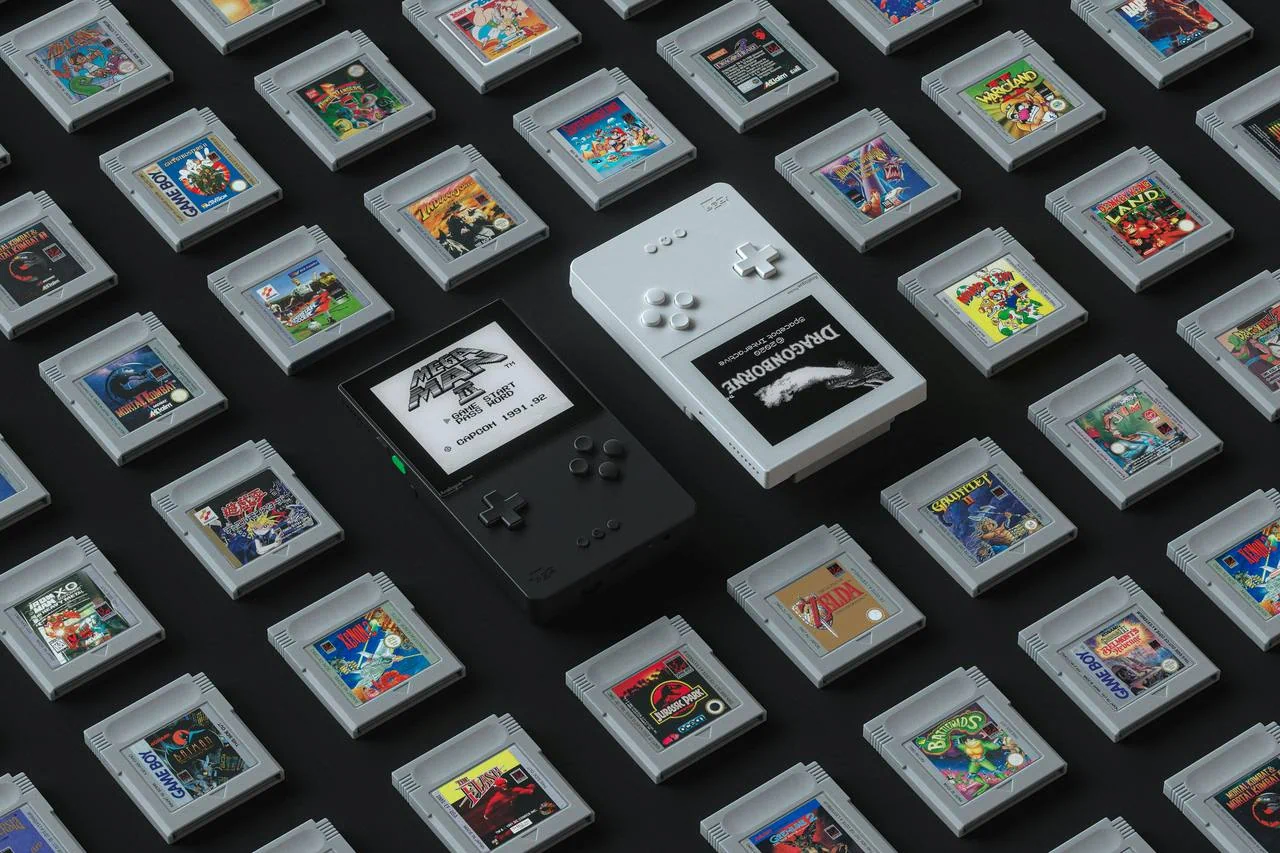
Out of the box, the system possesses native cartridge slot support for a massive library of physical media, which can be further expanded via the openFPGA ecosystem, a developer focused platform allowing enthusiasts to load custom hardware configurations directly from storage. Compatibility spans across decades of portable engineering:
- Game Boy, Game Boy Color, and Game Boy Advance cartridges run natively using the internal physical cartridge slot;
- Game Gear, Neo Geo Pocket Color, Atari Lynx, and TurboGrafx 16 games can be played using specialized physical cartridge adapters;
- Sega Master System, Nintendo Entertainment System, and Super Nintendo frameworks are fully operational through third party openFPGA cores utilizing digital files.
Display Engineering and Subpixel Simulation
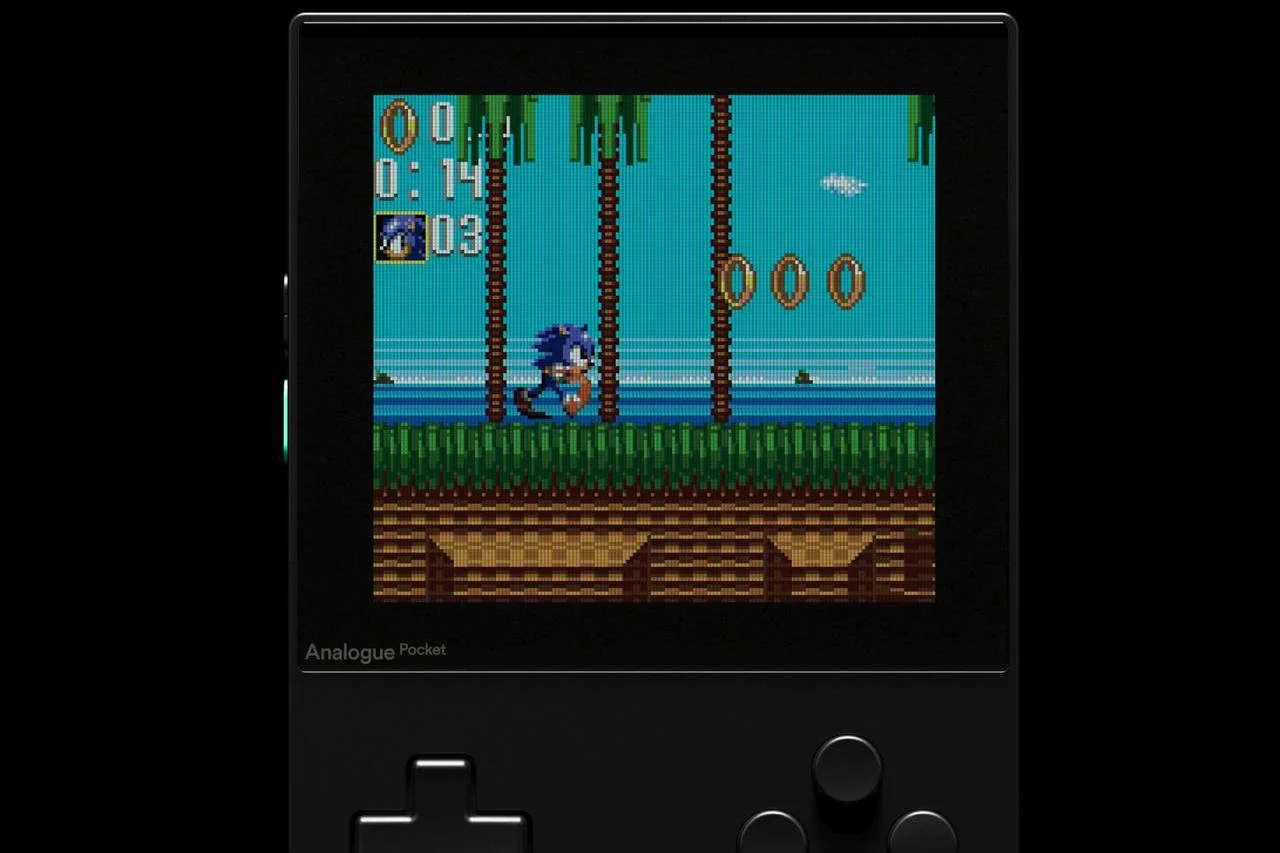
The visual presentation of the system is driven by a custom 3.5 inch LTPS LCD screen, which outputs at an astonishing 1600×1440 resolution and achieves a density of 615 pixels per inch. This resolution was selected due to a brilliant piece of mathematical symmetry, because 1600×1440 is exactly ten times the horizontal and vertical resolution of the original 1989 Game Boy, which operated at a modest 160×144 pixels.
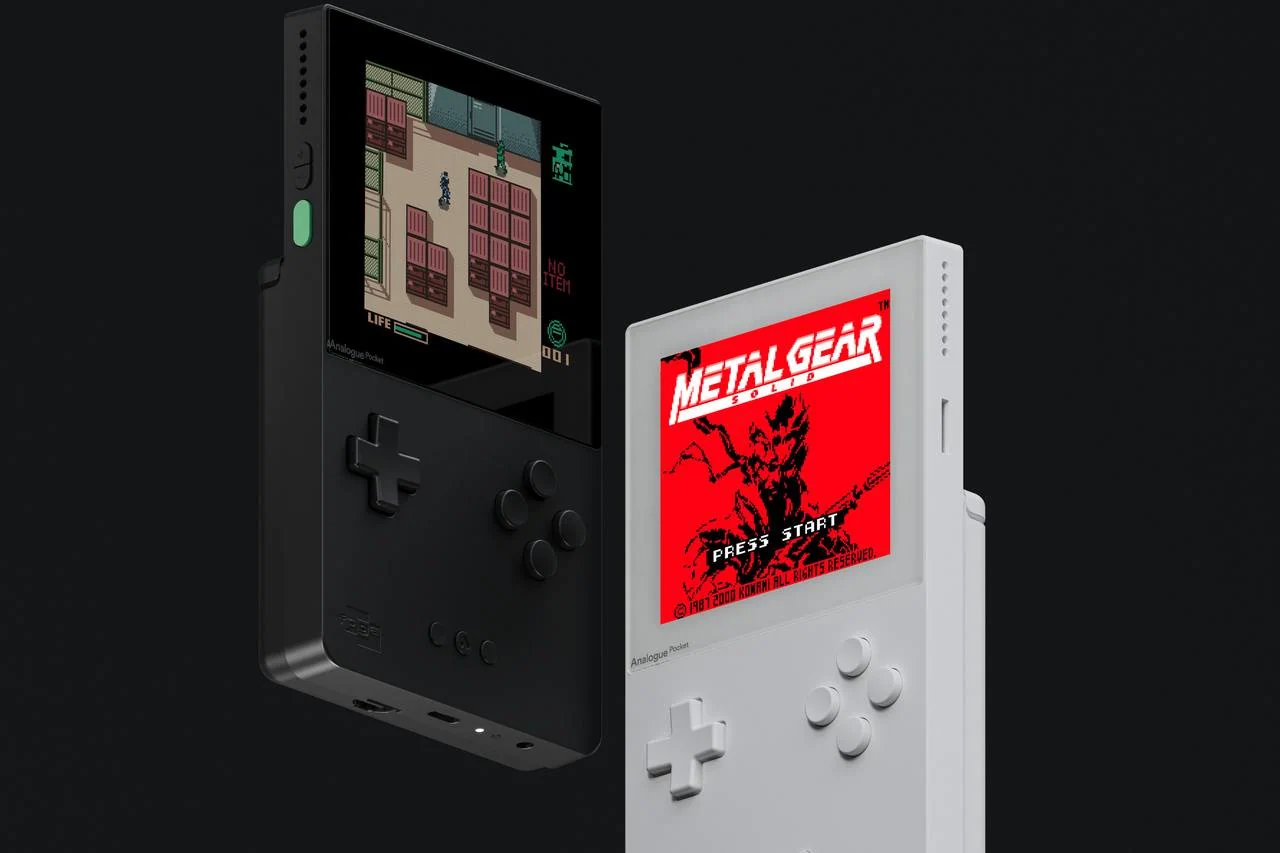
This exact matching allows for perfect 10x integer scaling, ensuring that every single pixel from an original game cartridge is mapped cleanly to a geometric grid on the screen without any blurring, interpolation, or edge artifacts. The display panel is protected by damage resistant Gorilla Glass, ensuring durability during mobile operation.
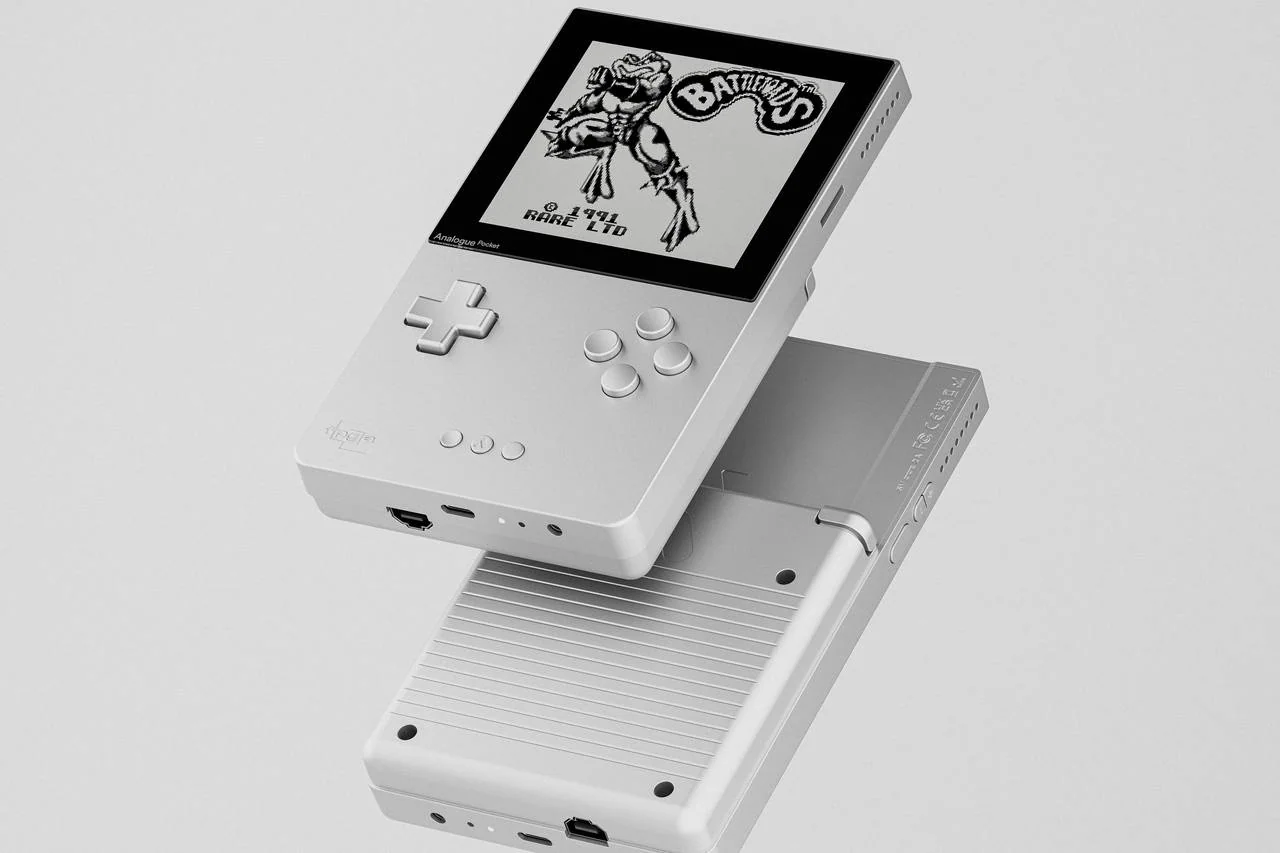
Beyond sheer sharpness, the system features Original Display Modes that leverage the massive pixel density to accurately simulate the physical characteristics of classic screens. These modes do not simply apply cheap visual filters, they dynamically reconstruct the subpixel structures, matrix lines, and backlight behaviors of legacy displays:
- The DMG Mode perfectly recreates the distinct greenish tint, characteristic ghosting, and prominent pixel grid lines of the original monochrome Game Boy;
- The GBC Mode emulates the specific desaturated color profiles and reflective liquid crystal properties of the early color handheld;
- The GBA Mode reproduces the exact pixel layout and lower contrast ratio required to make original Game Boy Advance titles look exactly as developers intended.
Music Creation and Synthesizer Integration
Based on its capabilities as a gaming machine, the platform doubles as a dedicated portable music studio through its integration of Nanoloop. This software functions as a complete digital audio workstation combined with a specialized live performance sequencer and synthesizer, allowing chiptune musicians to compose intricate tracks natively on the hardware.
The internal synthesizer leverages the audio capabilities of the original retro sound chips, giving creators access to raw pulse waves, white noise generators, and customizable audio samples. Physical connectivity options enable seamless integration into standard studio environments:
- MIDI Type-A and Type-B cables allow the device to receive clock sync or note data directly from modern software sequencers running on a computer;
- Analog Sync cables enable direct hardware level synchronization with external drum machines, pocket operators, and modular synthesizers;
- Pocket Link cables permit musicians to daisy chain multiple handheld units together to run synchronized instances of the audio software simultaneously.
Expanded Connectivity and the Ecosystem
The architecture is built to expand far beyond standalone portable play, offering deep integration with external accessories and storage solutions to create a unified ecosystem.
Storage and system expansions are handled primarily via the internal microSD card slot, which accommodates high capacity storage media for firmware updates, save state storage, and game development projects. When users desire a traditional home console experience, the device can be inserted into the Analogue Dock, which expands the system capabilities dramatically:
- The HDMI output port routes the video signal to an HDTV, utilizing a high quality internal scaling engine to output a pristine 1080p signal;
- The Dual USB inputs provide instant connectivity for wired controllers, keyboard peripherals, or external storage drives;
- The Wireless connectivity suite integrated into the dock supports up to four players simultaneously via Bluetooth or low latency 2.4GHz wireless protocols.
Convenience and Developer Frameworks
The modern operating system running on the dual FPGA chips provides convenience features that were entirely impossible on original retro platforms. The Sleep and Wake engine allows users to suspend gameplay instantly at any moment by tapping the power button, dropping the device into a low power state while saving a temporary snapshot of the active memory. Pressing the button again restores the system to the exact execution cycle within fractions of a second.
Furthermore, a deep partnership with GB Studio turns the device into an ideal development kit for indie game designers. This visual game creation software allows users to build authentic handheld games without writing complex assembly code, compiling files directly into a specialized format that can be loaded onto the hardware for native play testing.
Final Thoughts
The platform transcends standard retro gaming novelties by pairing uncompromising hardware level accuracy with high end modern engineering. By combining perfect physical media compatibility with advanced display reproduction and robust music creation tools, it serves as the definitive reference standard for exploring, preserving, and expanding the rich history of handheld gaming.
Full Specs
| Compute | Specs |
|---|---|
| Processor | Altera Cyclone V with 49k LEs Altera Cyclone 10 with 15k LEs |
| RAM | 3.4 MB BRAM 2x 16 MB 16-bit Cellular RAM 64 MB 16-bit SDRAM 256 KB 16-bit Asynchronous SRAM |
| Display | Specs |
| Resolution | 1600 (w) × 1440 (h) pixels (10:9 aspect ratio, allowing a 10x integer scale of the original Game Boy and Game Boy Color) |
| Display size/type | 3.5 inch backlit LTPS LCD display |
| Display other specs | Variable refresh 30 Hz – 62 Hz and 360° display rotation (tate mode) |
| Connectivity/Expansion | Specs |
| Extra connection | Game Boy link cable |
| Extra storage | Micro SD card slot |
| Audio | Specs |
| Output | Stereo speakers |
| Connection | 3.5 mm headphone jack |
| Power | Specs |
| Input | USB-C charging with 18W fast charging |
| Battery | Rechargeable lithium ion 4300mAh battery |
| Autonomy | 6-10 hour gameplay time & 10+ hour sleep time |
| Size and Weight | Specs |
| Size | Approximately 3.4 by 5.86 by 0.86 inches (86 mm × 149 mm × 22 mm) (WxHxD) |
| Weight | Approx. 292.6 grams |
| Software | Specs |
| Operating System | Analog OS |
| Compability | Compatible by default with Game Boy, Game Boy Color and Game Boy Advance game cartridges |
Have fun!