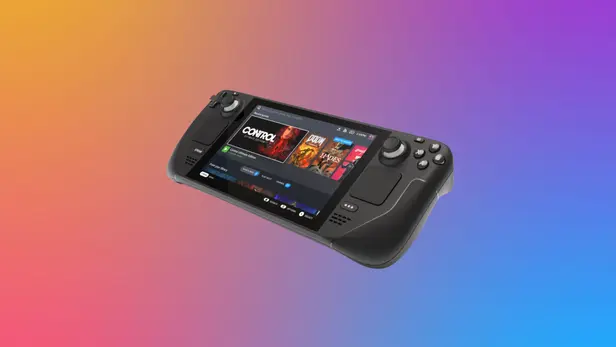
The Steam Deck LCD stands as a pivotal milestone in mobile computing, successfully bridging the gap between desktop personal computers and dedicated gaming consoles. Developed by Valve Corporation, this device shifts the paradigm of portable gaming by operating as an open hardware ecosystem, allowing users complete freedom over software installation while maintaining a streamlined, console-like frontend interface.
Hardware Architecture and APU Specifications
At the absolute center of the hardware layout is a bespoke system on a chip, which was co-developed with Advanced Micro Devices, codenamed Aerith. This accelerated processing unit is fabricated on a 7-nanometer process node, optimizing thermal output and electrical efficiency within a tight space constraint.
The underlying computational elements are split into specific processing pipelines:
- Central Processing Unit: Built upon the Zen 2 architecture, featuring 4 cores and 8 threads that scale dynamically between 2.4 GHz and 3.5 GHz depending on current processing loads;
- Graphics Processing Unit: Utilizes 8 compute units of the RDNA 2 architecture, running at clock speeds between 1.0 GHz and 1.6 GHz to deliver roughly 1.6 teraflops of raw performance;
- System Memory: Features 16GB of unified LPDDR5 RAM running on a 128-bit quad-channel bus, providing an aggregate memory bandwidth of 5500 megatransfers per second;
- Power Envelope: Operates within a strict Thermal Design Power range scaling from 4W up to a maximum of 15W, which can be limited manually via the quick access overlay.
Display Characteristics and Visual Metrics
The visual output relies on a 7-inch In-Plane Switching liquid-crystal display panel. It uses a native resolution of 1280×800 pixels, producing a 16:10 aspect ratio that provides a vertically taller viewing canvas compared to standard widescreen televisions.
| Metric | Specification Details |
|---|---|
| Panel Type | IPS LCD with capacitive multi-touch |
| Refresh Rate | 60Hz static, adjustable down to 40Hz |
| Peak Brightness | 400 nits typical |
| Color Gamut | 67% sRGB coverage |
| Contrast Ratio | 1000:1 typical |
The sub-60Hz display manipulation represents a major engineering feat, letting gamers synchronize the panel refresh rate directly with their current frame rate targets, which greatly smooths out frame pacing variations in demanding software titles.
Input Ergonomics and Tactile Controls
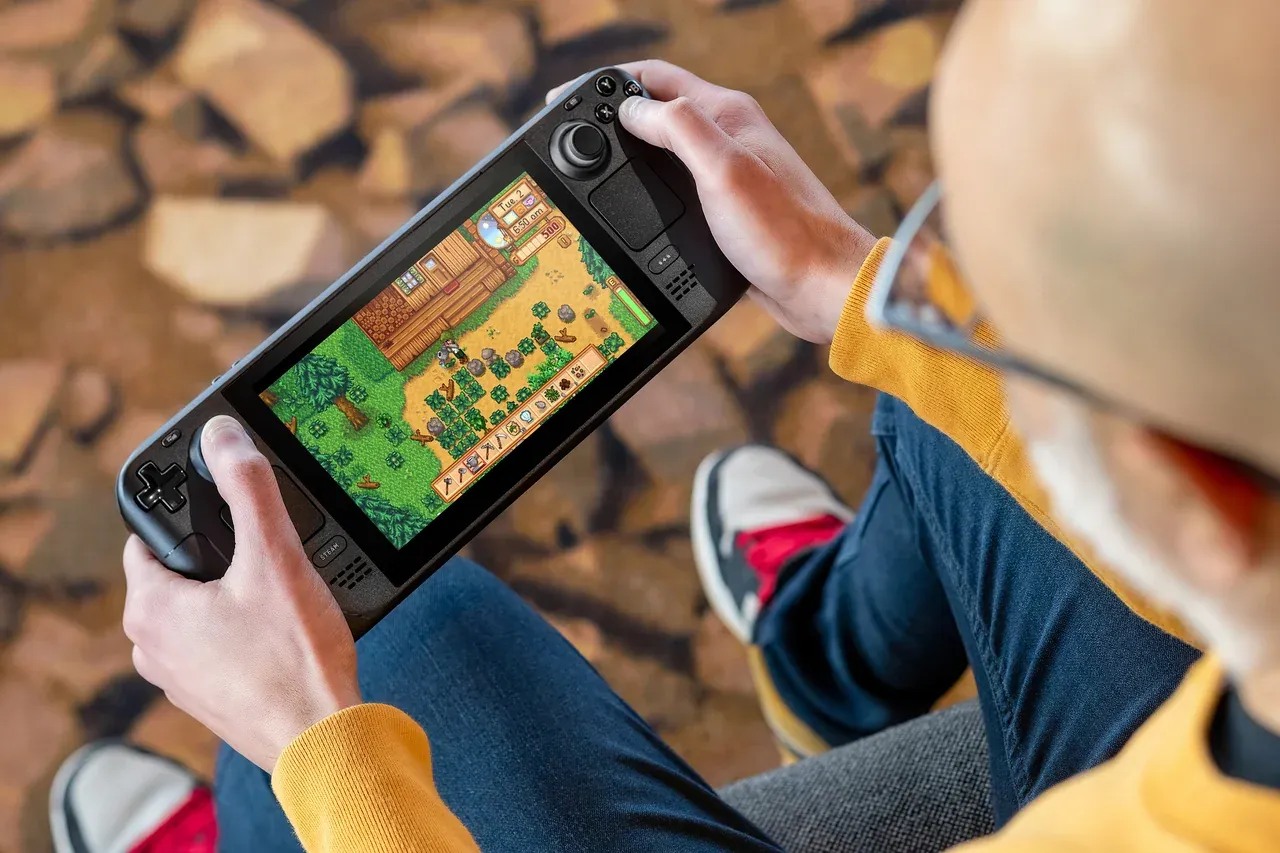
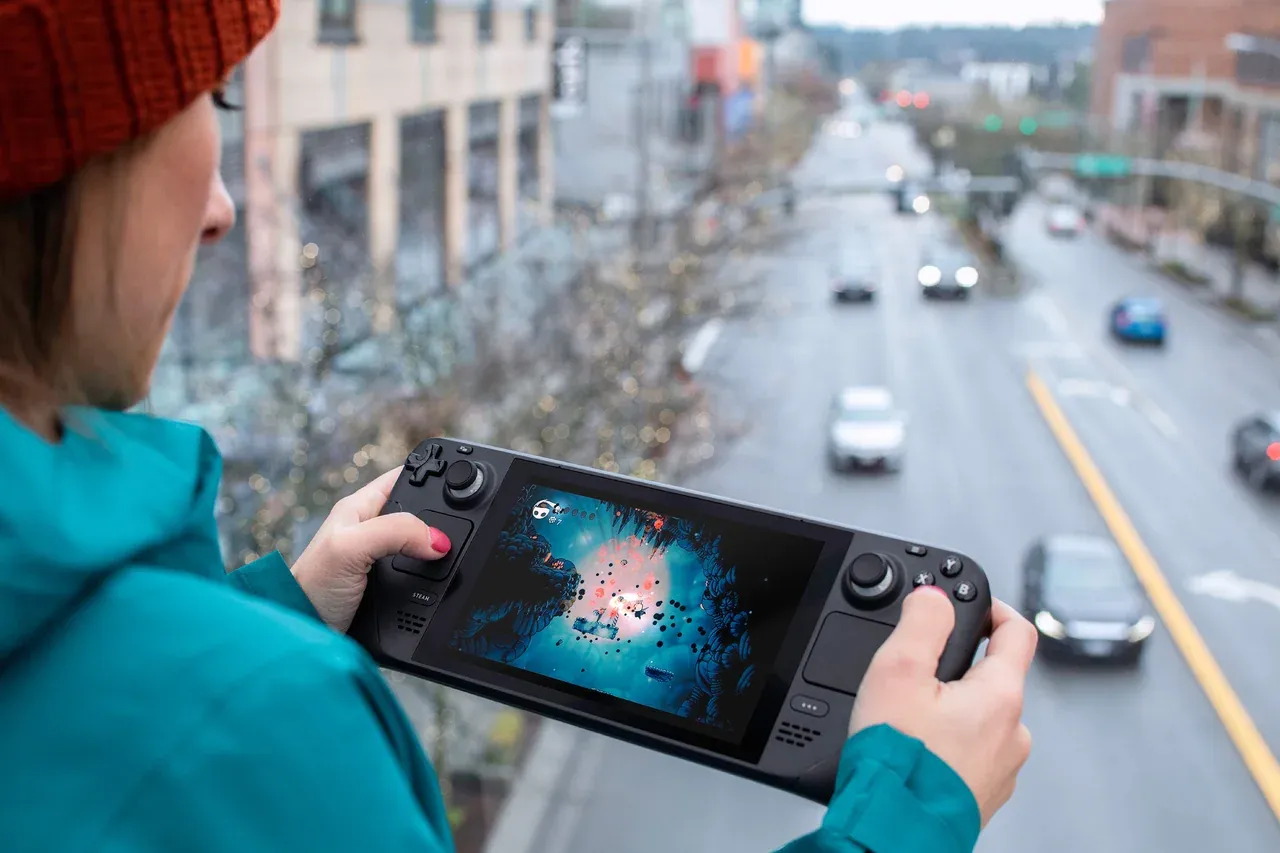
The physical chassis is deliberately oversized to place the primary controls on an even plane with the screen, reducing user wrist fatigue during prolonged usage.
Primary Input Clusters
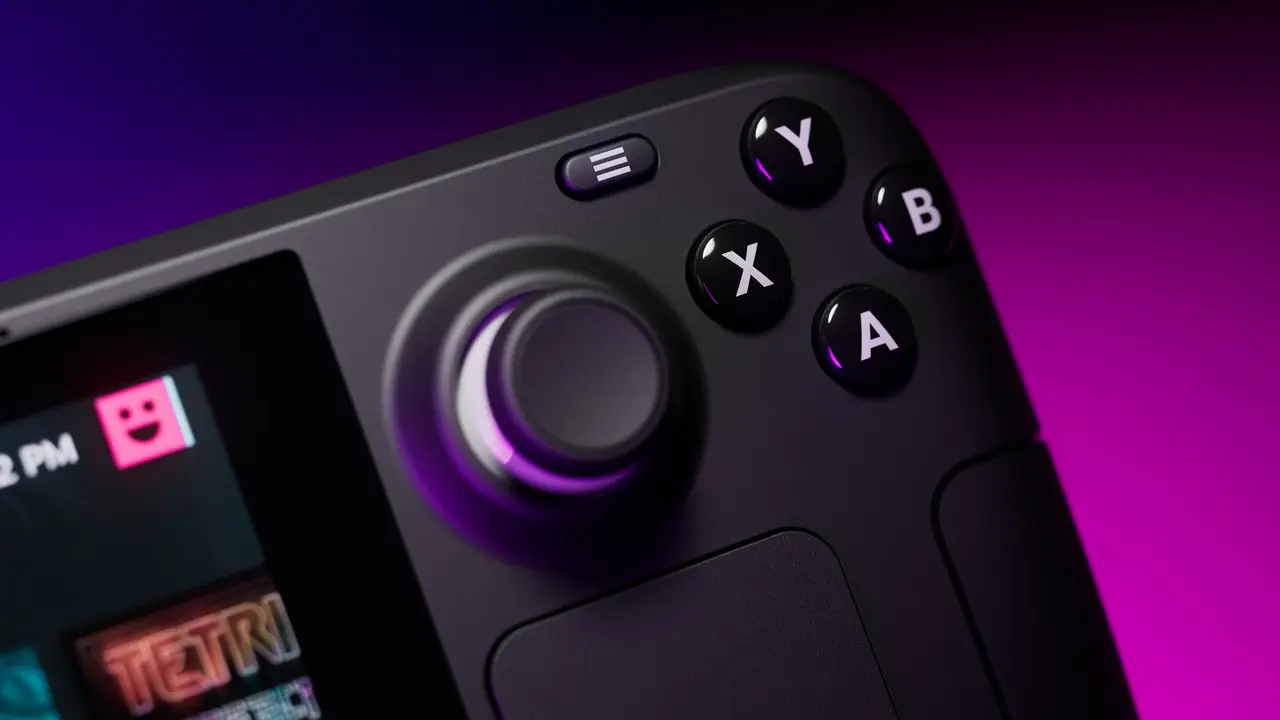
- Thumbsticks: Equipped with embedded capacitive touch sensors inside the plastic caps, which can trigger advanced features like gyro activation the moment a user places their thumb on the stick;
- Trackpads: Dual square touch surfaces utilizing linear resonant actuators to provide highly tactile haptic feedback, mimicking precision mouse physics for strategy and shooting games;
- Rear Grip Buttons: Four fully assignable switches arranged logically along the rear molded grips, allowing players to execute complex inputs without moving their fingers off the primary steering controls;
- Analog Triggers: Two multi-stage triggers with granular pull depth detection, utilizing traditional mechanical potentiometer sweeps to manage acceleration curves in racing simulators.
Storage Tiers and Internal Engineering Variances
Valve organized the hardware distribution into three clear price and performance segments, which are determined entirely by the internal storage medium and screen coatings.
- 64GB Entry Tier: Implements an eMMC storage chip operating on a legacy PCIe Gen 2 single-lane standard, which delivers slower read and write velocities;
- 256GB Mid Tier: Contains a faster solid-state drive operating over a modern NVMe PCIe Gen 3 interface, reducing level transition delays across modern software;
- 512GB Premium Tier: Maximizes data transfer rates via high-speed NVMe storage while introducing a premium anti-glare etched glass display element that diffuses overhead reflections;
- Expandable Storage: Every single model features a spring-loaded MicroSD slot supporting the UHS-I standard, automatically formatting cards to the Ext4 filesystem for secondary background installations.
Thermals, Acoustics, and Power Management
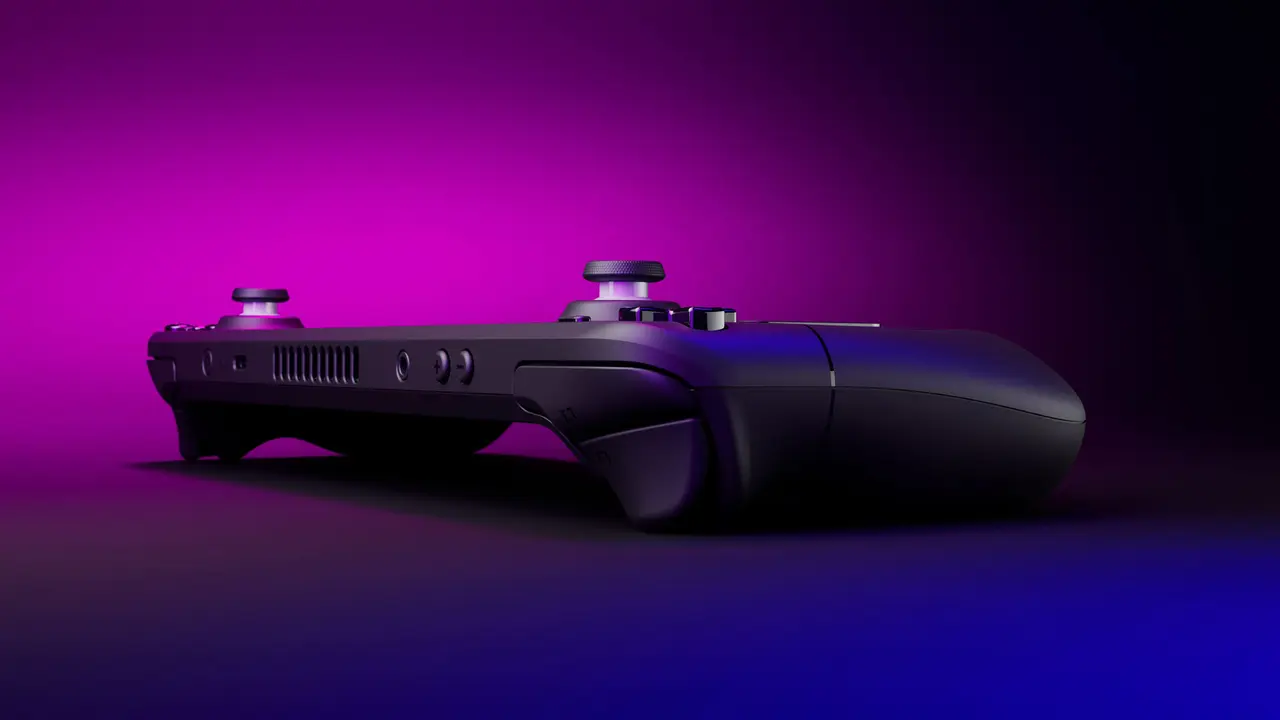
Managing a full 15W processor inside a closed plastic frame requires a specialized cooling apparatus. The thermal loop utilizes a single thick copper heat pipe connected to an aluminum radiator block, where a custom fluid-dynamic bearing fan expels warm air out through the upper ventilation ports.
The original cooling fans inside early production revisions utilized a high-pitched delta blade pattern, which was later adjusted to a quieter profile that lowers ambient sound pressure during heavy processing loads.
The system is powered by a 40 watt-hour lithium-ion battery pack. Because the platform runs uncurated desktop software, the overall battery lifespan varies significantly based on user configurations:
- High-Load Scenarios: Running demanding graphical applications at full 15W TDP drains the battery cell in approximately 90 to 110 minutes;
- Optimized Scenarios: Locking frame rates to 30 frames per second and reducing the internal TDP limit down to 8W extends usability out to roughly 3.5 hours;
- Low-Power Scenarios: Engaging in light 2D puzzle games, retro emulation software, or remote game streaming drops system consumption to a minimum, pushing operational times to 7 or 8 hours.
SteamOS Ecosystem and Proton Translation Architecture
The real strength of the device lies in its specialized software stack, which departs from standard Microsoft configurations to avoid heavy background processing overhead.
Operating System Fundamentals
- Arch Linux Base: Shipped with SteamOS 3.0, moving away from older Debian distributions to leverage a rolling release schedule with highly modern graphics driver stacks;
- Immutable Filesystem: The primary operating system partition is locked as read-only by default, protecting the platform from unintentional directory corruption during user modifications;
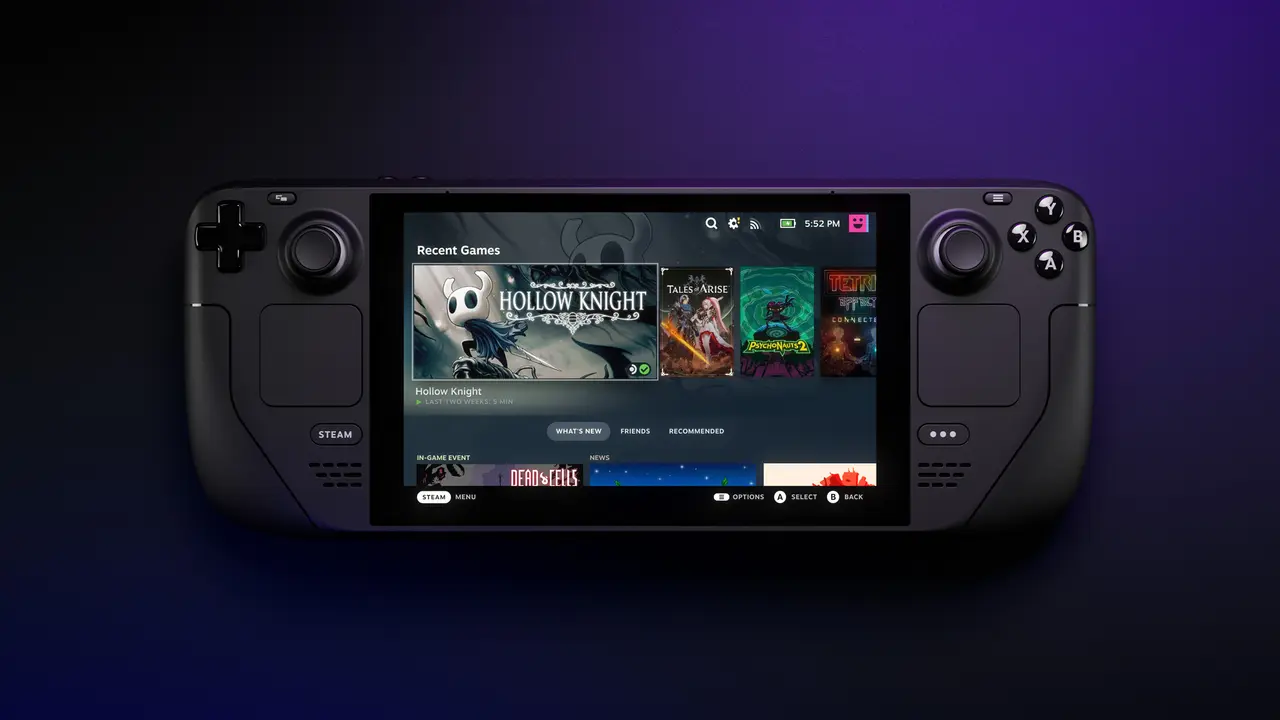
- Desktop Mode Environment: Pressing the power menu allows users to enter a fully open KDE Plasma desktop workspace, turning the handheld tool into a functional workstation that accepts standard Linux flatpak software packages.
The Proton Translation Layer
Because the vast majority of personal computer games are programmed specifically for Windows environments, SteamOS incorporates Proton, an open-source software layer. Rather than operating like a slow emulator, Proton functions as a real-time translator. It translates Windows application program interfaces, such as DirectX 11 and DirectX 12, directly into native Vulkan graphical instructions. This system bypasses significant emulation performance losses, allowing complex software to run at near-native framerates on an alternative platform.
Final Thoughts
The Steam Deck LCD remains a triumph of open hardware engineering, delivering unmatched flexibility inside a portable chassis. By choosing an open Linux ecosystem over closed console architecture, Valve created a multi-functional handheld computer that successfully runs thousands of legacy desktop titles. While the battery longevity and color richness reflect the technical limitations of its release window, its robust input layout and deep software optimization ensure it remains a powerful benchmark for portable gaming.
Full Specs
| Category | Specifications |
|---|---|
| Compute | Processor: 7 nm AMD APU CPU: Zen 2 4c/8t, 2.4-3.5GHz (up to 448 GFlops FP32) GPU: 8 RDNA 2 CUs, 1.6GHz (1.6 TFlops FP32) APU Power: 4-15W |
| RAM | 16 GB LPDDR5 on-board RAM (5500 MT/s quad 32-bit channels) |
| Storage | Steam Deck 64GB Steam Deck 256GB Steam Deck 512GB* All include high-speed microSD card slot *Available while supplies last |
| Controls and Input | Gamepad Controls: A B X Y buttons, D-pad, L & R analog triggers, L & R bumpers, View & Menu buttons, 4 x assignable grip buttons Thumbsticks: 2 x full-size analog sticks with capacitive touch Haptics: HD haptics Trackpads: 2 x 32.5mm square trackpads with haptic feedback, 55% better latency compared to Steam Controller, pressure-sensitivity for configurable click strength Gyro: 6-Axis IMU |
| Display | Resolution: 1280 x 800 X RGB Type: Optically bonded IPS LCD for enhanced readability Size: 7″ diagonal Brightness: 400 nits typical Refresh Rate: 60Hz Touch Enabled: Yes Light: Ambient light sensor (ALS) |
| Connectivity | Bluetooth: Bluetooth 5.0 (support for controllers, accessories, and audio) Wi-Fi: Dual-band Wi-Fi radio, 2.4GHz and 5GHz, 2 x 2 MIMO, IEEE 802.11a/b/g/n/ac |
| Audio | Channels: Stereo with embedded DSP for an immersive listening experience Microphones: Dual microphone array Headphone/Mic Jack: 3.5mm stereo headphone/headset jack Digital: Multichannel audio via DisplayPort over USB-C, standard USB-C, or Bluetooth 5.0 |
| Power | Input: PD3.0 Type C power supply, 45W, 1.5m cable Battery: 40Whr battery, 2 – 8 hours of gameplay |
| Expansion | microSD: UHS-I supports SD, SDXC, and SDHC External Connectivity: USB-C with DisplayPort 1.4 Alt-mode support; up to 8K @60Hz or 4K @120Hz, USB 3.2 Gen 2 |
| Size and Weight | Size: 298mm x 117mm x 49mm Weight: Approx. 669 grams |
| Software | Operating System: SteamOS 3 (Arch-based) Desktop: KDE Plasma |
Have fun!