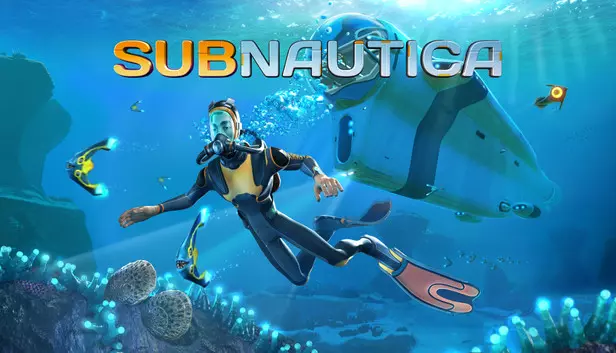
Subnautica stands as a monumental achievement in the survival genre, blending open world exploration with a deeply atmospheric, narrative driven experience. Set on the mysterious alien ocean planet designated as Planet 4546B, the game strips away the typical tropes of terrestrial survival to plunge players into a fully realized aquatic ecosystem. Played from an immersive first person perspective, it transforms the vast, uncharted ocean from a beautiful playground of discovery into a terrifying abyss of psychological tension.
Dive Into a Vast Underwater World
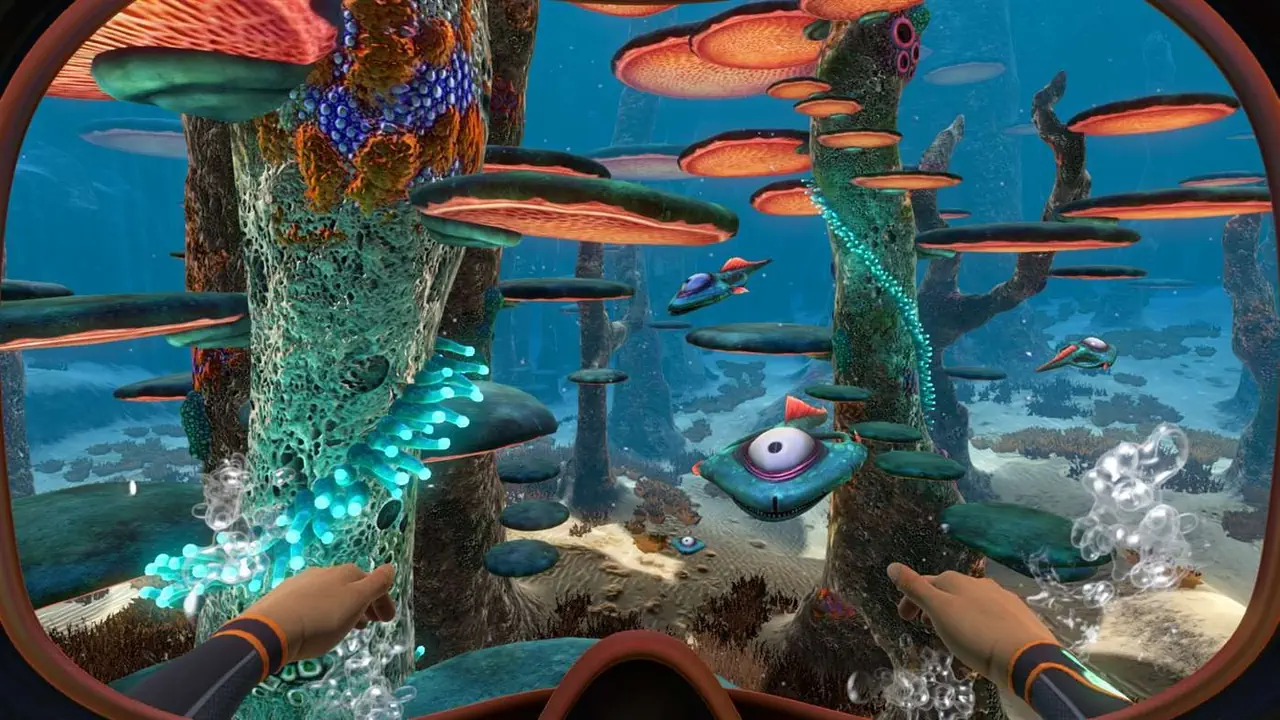
The aquatic expanse of Planet 4546B is not merely a single body of water, rather it is a meticulously layered network of distinct ecological zones. Progression in Subnautica is measured vertically, requiring players to venture from the comforting, sun drenched safety of the Safe Shallows into progressively hostile territory. As players push boundaries, they discover the haunting crimson vistas of the Grassy Plateaus, the claustrophobic tangles of the Kelp Forests, and the luminescent alien beauty of the Mushroom Forest. Beyond these initial zones lie the true tests of endurance, including the crushing depths of the Grand Reef, the eerie tranquility of the Bulb Zone, and the suffocating darkness of the Blood Kelp Zones. Each biome introduces unique flora, fauna, and environmental hazards, requiring players to constantly monitor their oxygen supply while adapting to shifting thermal profiles and crushing atmospheric pressures.
Scavenge, Craft, and Survive
The narrative begins with a catastrophic event, the sudden and violent destruction of the Alterra Corporation capital ship known as The Aurora. Stepping into the flippers of Ryley Robinson, a lone systems maintenance manager, players must immediately contend with the harsh realities of sudden isolation. The immediate survival loop demands the gathering of basic necessities, tracking down nutrient rich Peepers or Bladderfish to maintain adequate hydration and nutrition while utilizing the survival pod’s Fabricator. As basic needs are secured, the gameplay expands into an intricate progression system. Raw mineral deposits like titanium, copper, and quartz are transformed into essential survival apparatus, ranging from high capacity oxygen tanks to advanced Seaglides that drastically increase underwater mobility. Eventually, players unlock blueprints for specialized heavy machinery, seeking out rare crystalline elements and specialized alloys in the deepest sectors of the map to forge endgame technology.
Construct Underwater Habitats
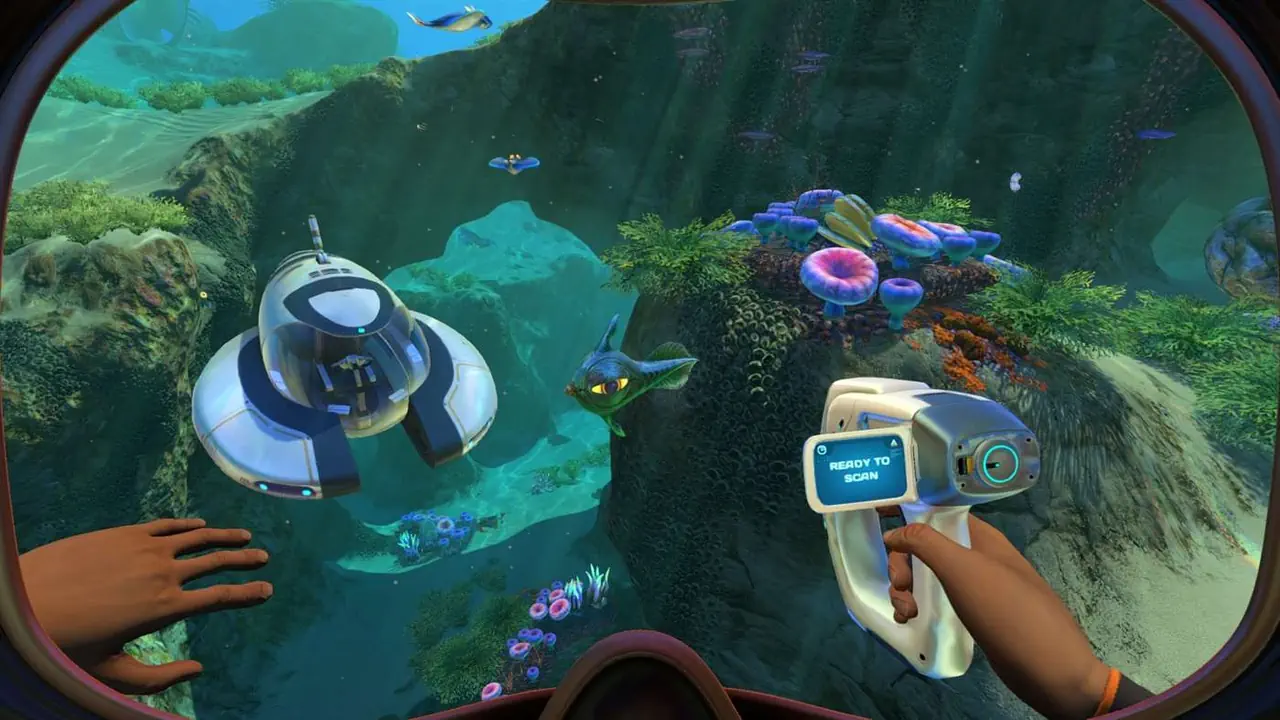
Survival on an alien world requires more than a temporary lifepod, driving the necessity to construct permanent, localized seabases. Using the versatile Habitat Builder tool, players can architect elaborate underwater complexes anywhere from shallow reefs to the edges of volcanic trenches. The construction mechanics require careful planning, as players must balance aesthetic design with functional reality, incorporating solar panels, bioreactors, or nuclear reactors to maintain power grids. Furthermore, the structural physics of the ocean are a constant threat, because every window, corridor, or multi purpose room added reduces the overall hull integrity of the structure. If the structural limits are breached, the base will suffer catastrophic flooding, forcing players to rapidly utilize a welding tool to patch structural fractures before their precious stockpiles and interior systems are permanently compromised.
Unravel the Mystery
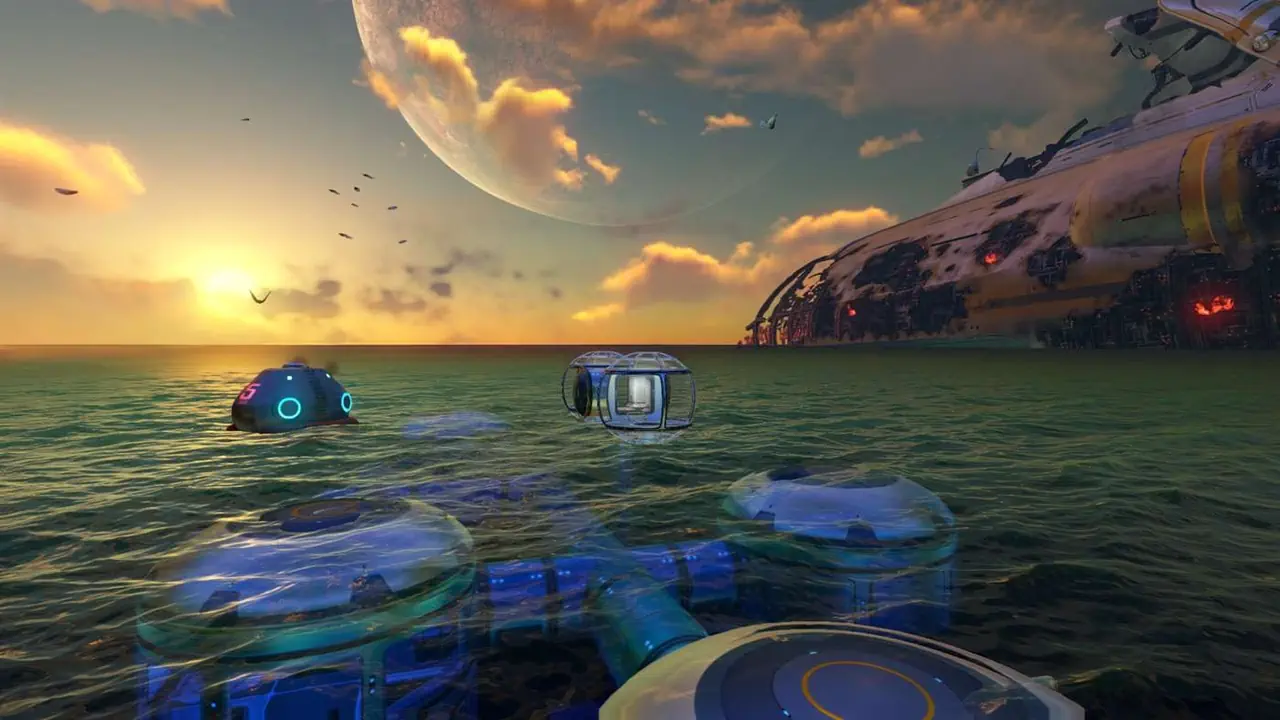
Unlike many traditional sandbox survival games, Subnautica features a compelling, highly structured narrative that rewards deep exploration. The overarching plot is pieced together through voice logs found within scattered lifepods and the ruined structures of previous expeditions, such as the ill fated Degasi crew. Players gradually uncover a global ecological crisis, learning that the entire planet is under quarantine due to a highly lethal pathogen known as the Kharaa bacterium. The mystery deepens with the discovery of massive, geometric architecture constructed from unknown materials, left behind by an ancient alien civilization known as the Precursors or Architects. To escape the planet, players cannot simply build a rocket, they must first find a cure for the planetary plague and deactivate the automated orbital defense grid that brought down The Aurora in the first place.
Disrupt the Food Chain
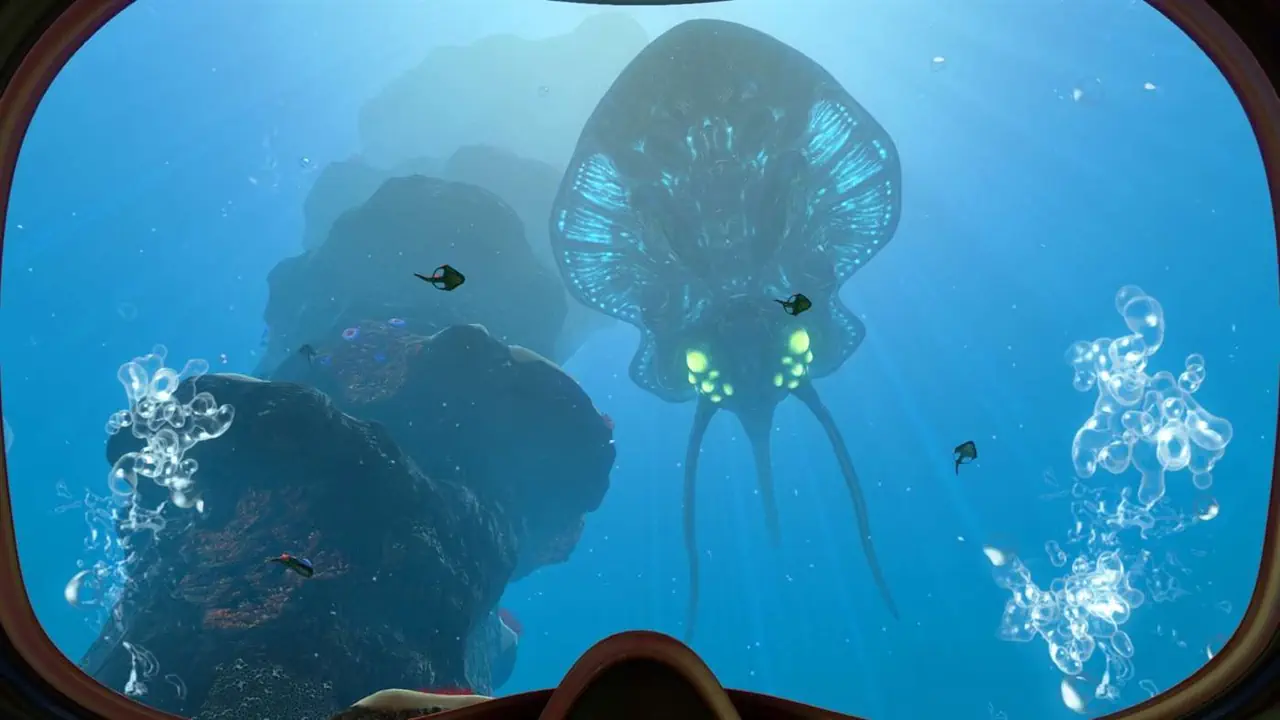
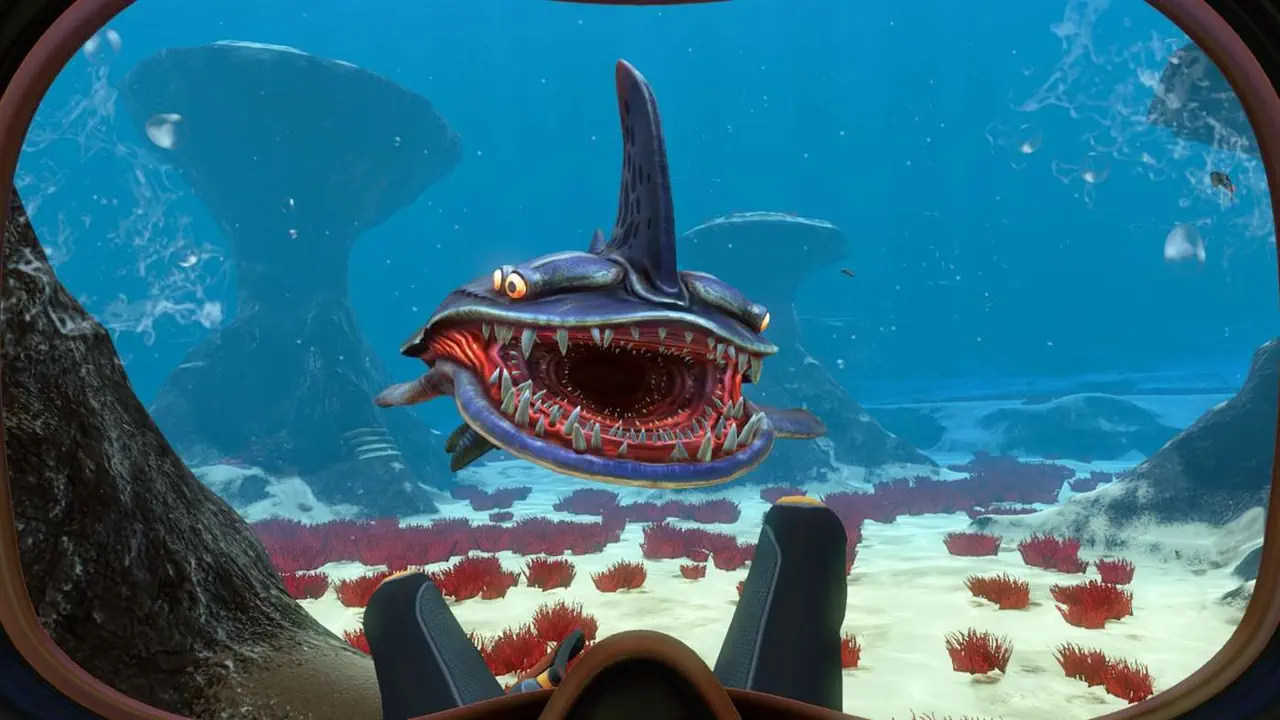
The biological systems of Planet 4546B are vibrant, reactive, and hierarchical, presenting a dynamic web of behavior where the player is rarely at the top of the food chain. Understanding creature behavior is vital for survival, as players can manipulate the local ecosystem by using small fish to distract aggressive Stalkers or utilizing the Stasis Rifle to temporarily freeze threats in place. The deeper one dives, the more terrifying the fauna becomes, escalating from irritating Bonesharks and hypnotic Mesmers to massive, territorial entities. The true psychological horror of the game stems from encountering Leviathan class lifeforms, including the iconic Reaper Leviathan patrol lines around the crashed ship, the ghostly apparitions of the Ghost Leviathan in the deep trenches, and the colossal, magma spewing Sea Dragon Leviathan guarding the molten core of the world.
Handle the Pressure
To survive the extreme depths where the human body would instantly collapse under atmospheric weight, players must invest heavily in advanced vehicular transport. The journey begins with the nimble Seamoth, a highly maneuverable mini submarine ideal for scouting mid level depths, though highly vulnerable to large predators. For heavy lifting and deep trench exploration, players utilize the Pressure Re-Active Waterproof Nanosuit, affectionately known as the PRAWN Suit, which allows players to walk across the ocean floor, drill for massive resource deposits, and grapple across cavern walls. The pinnacle of maritime engineering in the game is the Cyclops, a massive, pilotable mobile base that requires active power cell management, careful navigation through tight spaces, and defensive posturing against aggressive apex predators that can breach its thick hull.
Fear the Night
The passage of time on Planet 4546B dramatically alters the gameplay dynamics, introducing a stark contrast between day and night cycles. When the local star dips below the horizon, the relatively welcoming ocean transforms into a pitch black void of profound psychological isolation. Visibility drops to near zero, forcing reliance on artificial flares, vehicle headlights, or flashlight beams that can inadvertently attract photophobic predators. However, the night also reveals a stunning, bioluminescent transformation of the planet, as flora and fauna emit brilliant, colorful glowing patterns that light up the abyssal darkness, offering an ethereal beauty to those brave enough to wander into the nocturnal waters.
Dive Below the Ocean Floor
The final phases of exploration force the player completely out of the open ocean and into a claustrophobic subterranean underworld. Massive cave systems wind deep beneath the planet’s crust, leading to prehistoric biomes like the Lost River, an ancient graveyard of colossal extinct creatures bathed in a toxic green brine river. Deeper still lies the Inactive Lava Zone and the Lava Lakes, subterranean underworlds dominated by extreme thermal energy, active magma flows, and unique resources critical for late game upgrades. Navigating these abyssal caverns requires meticulous navigation, exceptional vehicle management, and a steady pulse, because getting lost in these deep labyrinths means certain asphyxiation or a fiery death.
Difficulty Modes
The game offers diverse gameplay options designed to accommodate various player preferences and playstyles through four distinct structural modes. In the standard Survival Mode, players must manage a delicate balance of physical attributes, constantly monitoring health, hunger, hydration, and oxygen consumption while facing item penalties upon death. For players seeking a more relaxed experience focused purely on exploration and narrative progression, Freedom Mode completely removes the mechanics of hunger and thirst, allowing players to explore without the constant pressure of hunting for food and water.
Conversely, veteran players looking for the ultimate survival challenge can opt for Hardcore Mode, an unforgiving experience that introduces permanent death, immediately deleting the entire save file upon a single expiration, while simultaneously disabling all low oxygen audio warnings. Finally, Creative Mode strips away all survival and resource limitations entirely, granting players instantaneous access to all structural blueprints, invulnerable vehicles, and unlimited crafting capabilities without any material or energy requirements, transforming the game into an expansive underwater digital sandbox.
About the Development Team
The creation of this underwater masterpiece is credited to Unknown Worlds Entertainment, an independent game development studio established by industry veterans Charlie Cleveland and Max McGuire. The studio originally built its reputation through the critically acclaimed modification for Half-Life known as Natural Selection, which seamlessly blended real time strategy elements with first person shooter mechanics. The development of Subnautica embraced a highly unique, decentralized production philosophy, utilizing a fully remote workforce scattered across global territories, including the United States, the United Kingdom, France, the Czech Republic, and Australia. Managed through a central hub based in San Francisco, California, the team pioneered a transparent development cycle, heavily incorporating community feedback during an extended early access phase to carefully refine the game’s mechanics, balancing, and environmental storytelling.
Final Thoughts
Ultimately, Subnautica stands as a profound testament to atmospheric world design, expertly weaving together the terror of the unknown with the intoxicating joy of discovery. It transitions beautifully from a frantic scramble for basic survival resources into an epic, deeply engaging science fiction mystery that challenges your perception of the ocean deep. Whether you are constructing a massive multi level seabase overlooking a volcanic trench or silently steering a massive submarine past a lurking leviathan, the experience leaves an indelible impression, solidifying its place as an unmissable masterpiece for anyone who values deep, immersive interactive storytelling.
What you need to run
Minimum System Requirements
| Component | Specification |
|---|---|
| OS | Windows 7 64-bit or higher |
| Processor | Intel Core i3 or AMD Ryzen 3 @ 2.6GHz |
| Memory | 4 GB RAM |
| Graphics | GeForce GTX 550 Ti or Radeon HD 7750 |
| Storage | 20 GB available space |
Recommended System Requirements
| Component | Specification |
|---|---|
| OS | Windows 10 64-bit |
| Processor | Intel Core i5 or AMD Ryzen 5 @ 3.2GHz+ |
| Memory | 8 GB RAM |
| Graphics | GeForce GTX 970 or AMD Radeon RX 480 |
| Storage | 20 GB available space |
Have fun!