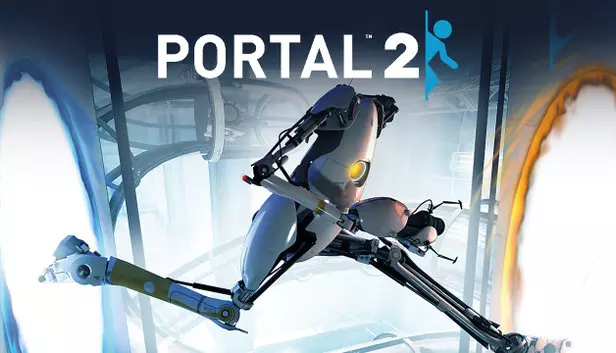
The architectural layout of Portal 2 shifts dynamically depending on the perspective of the entity navigating its labyrinthine structures. In the single player campaign, players step into the shoes of Chell, a silent protagonist whose resilience serves as a stark contrast to the shifting, mechanical maliciousness of the Aperture Science Laboratory. This environment functions less like a stagnant backdrop and more like a malleable, mechanized maze that responds directly to the player’s progression.
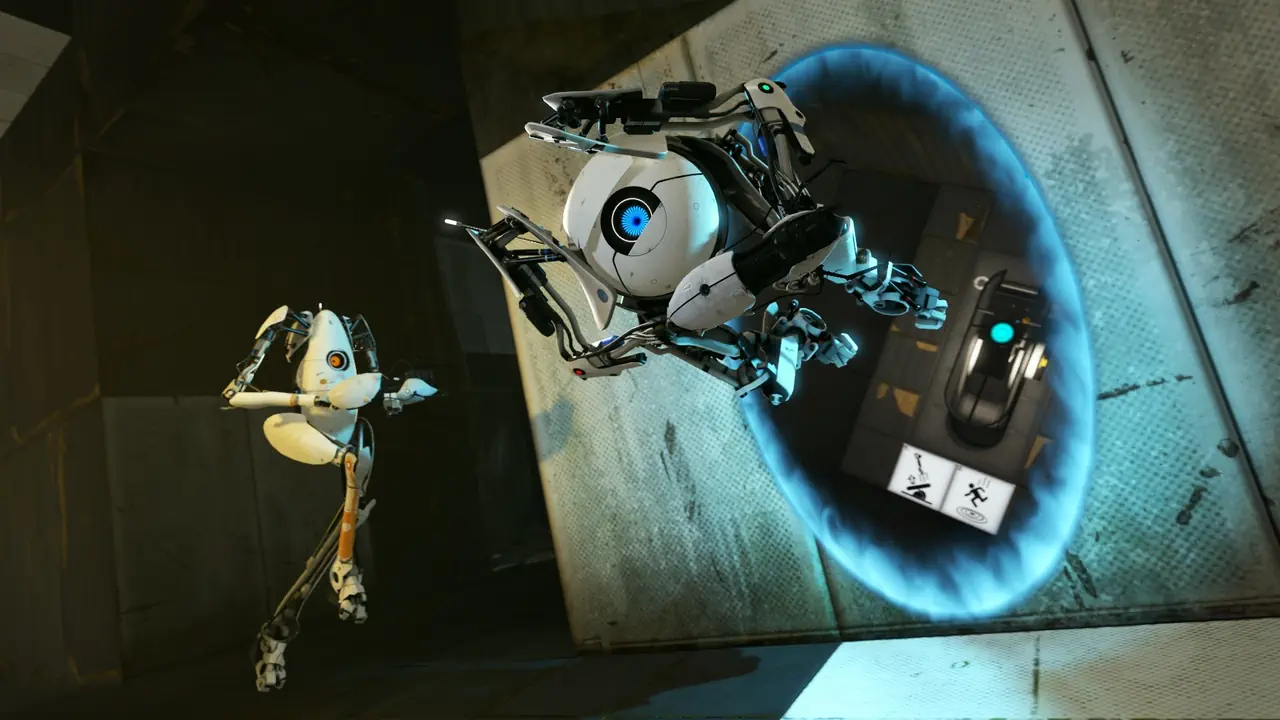
When transitioning to the cooperative campaign, the narrative framework expands to accommodate ATLAS and P-Body, two distinctly engineered robots designed by GLaDOS to execute tests that would prove fatal to biological entities. Even within the realm of user generated content, the presence of a simplistic humanoid icon, colloquially known as Bendy, grounds the player in the corporate, minimalist aesthetic of Aperture. Regardless of the persona assumed, the core vulnerability remains identical, as characters can withstand only a finite amount of environmental damage before suffering terminal failure.
Spatial Mechanics and the Physics of Teleportation
The foundational architecture of the gameplay relies entirely on the Aperture Science Handheld Portal Device, a tool that fundamentally rewrites spatial geometry. Initial structural tutorials familiarize the user with basic movement, environmental interactions, and the essential synchronization protocols required during cooperative play. The mechanical genius of the device lies in its ability to project two distinct, interconnected gateways onto compatible surfaces.
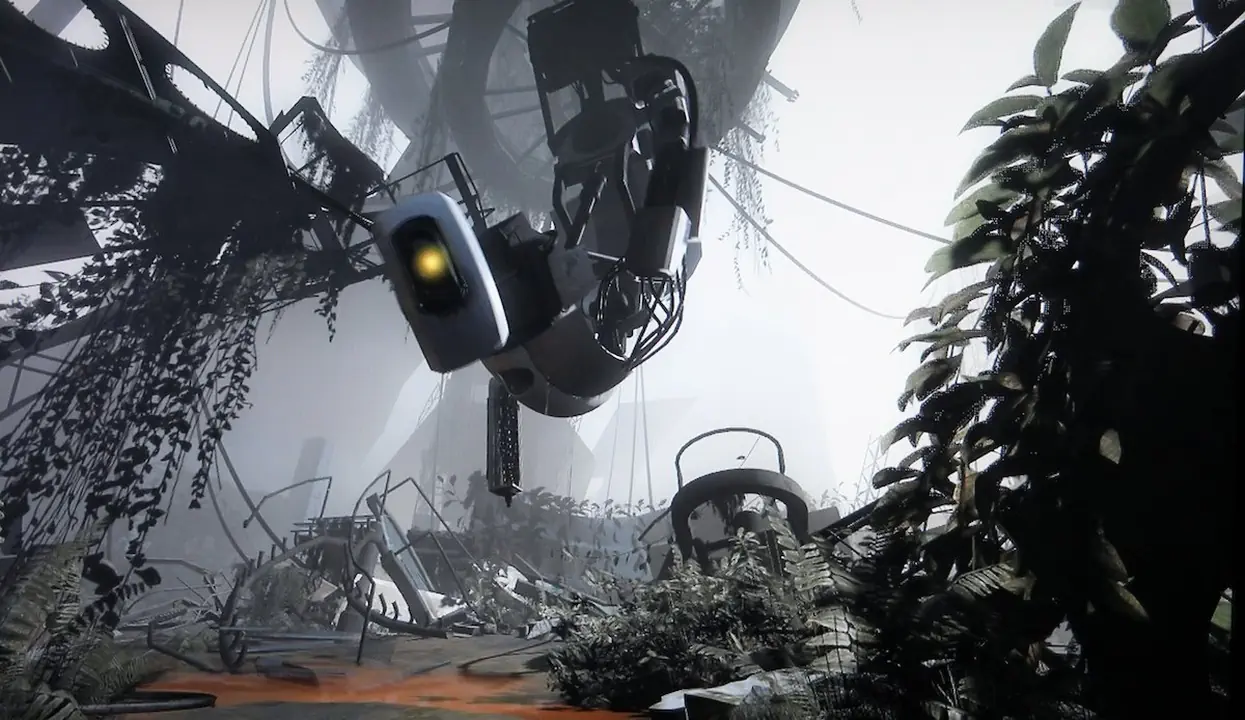
These gateways do not merely bridge separate spatial coordinates, they also preserve the fundamental physics of motion. The defining rule governing this interaction dictates that kinetic energy remains constant through transit. A character utilizing a vertical drop to build terminal velocity will find that momentum instantly translated into horizontal velocity upon exiting a wall-placed portal, a technique known as flinging. This conservation of momentum transforms the environment from a series of static obstacles into a complex canvas of kinetic puzzles.
Advanced Environmental Elements
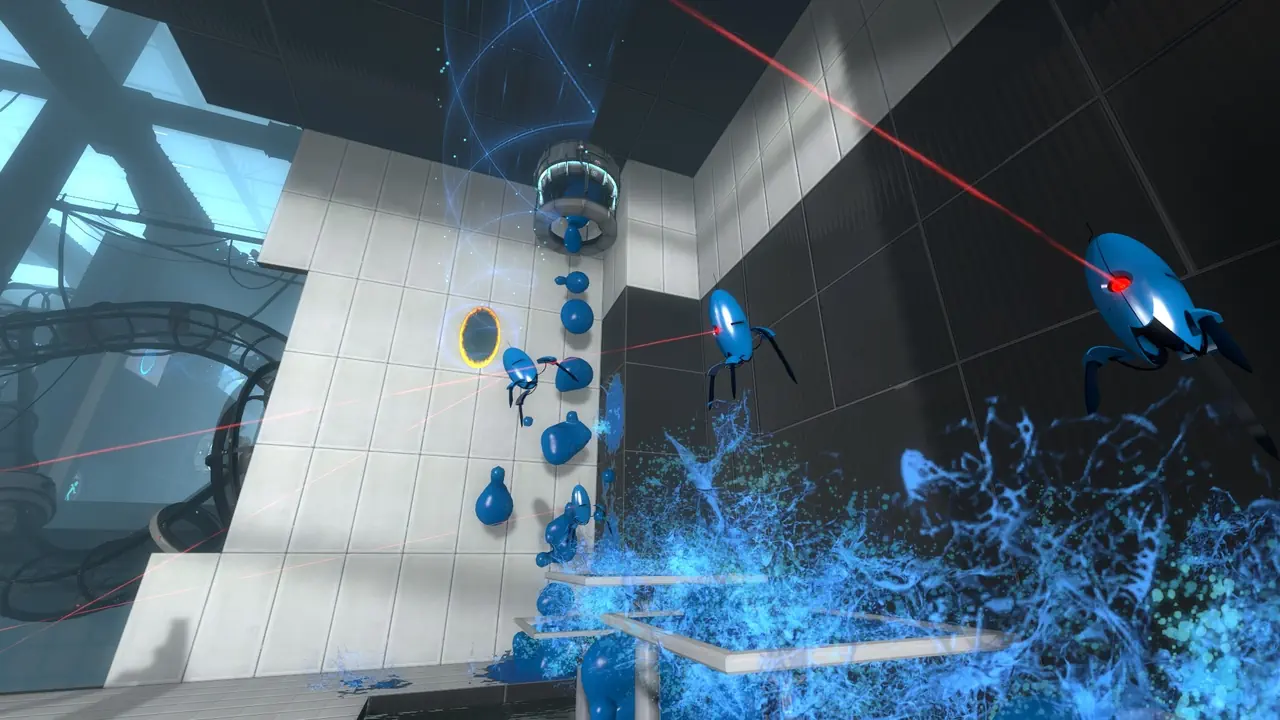
As players venture deeper into the decaying infrastructure of the facility, the puzzle design introduces several advanced technologies that interact seamlessly with the portal network. Thermal Discouragement Beams project deadly lasers that must be routed through portals to activate remote receptors, while Excursion Funnels project localized tractor beams capable of transporting objects or the players themselves against gravity. Simultaneously, Hard Light Bridges generate solid surfaces out of thin air, providing bridges across deadly hazardous pits or acting as shields against hostile forces. Players must also navigate around lethal, highly verbal Turrets that defend corridors with automatic gunfire.
The basic Weighted Storage Cube undergoes several iterations to facilitate these mechanics, including Redirection Cubes embedded with prismatic lenses to bend laser beams, spherical Edgeless Safety Cubes designed to roll into specific receptacles, and antique iterations found within the forgotten underground levels of the 1950s. The narrative even introduces chaotic cube-turret hybrids created during Wheatley’s erratic tenure as facility overseer, alongside brief, emotionally manipulative appearances of the Weighted Companion Cube.
The Chemistry of Mobility Gels
The introduction of liquid state chemical compounds drastically alters the surface properties of the test chambers, requiring players to coat the environment to manipulate physics. Orange Propulsion Gel drastically reduces friction, allowing players to cross vast horizontal stretches at extreme speeds to build up necessary momentum. Conversely, Blue Repulsion Gel alters the elasticity of surfaces, allowing players to bounce to otherwise unreachable heights.
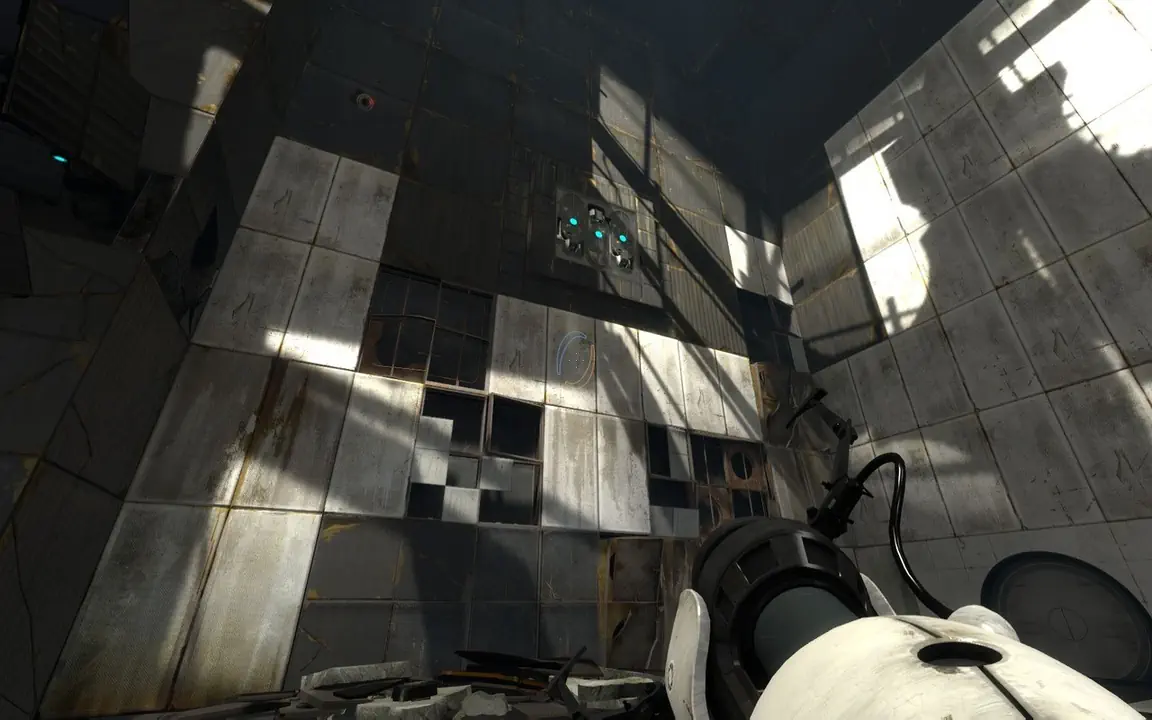
The most versatile substance, White Conversion Gel, coats non-conductive materials to make them receptive to portal placement, essentially allowing players to expand their spatial grid at will. Managing these gels requires careful spatial planning, as only one substance can occupy a specific surface at a time. Furthermore, environmental elements like moving water grilles serve as regulatory mechanics, washing away applied gels and resetting the environment to its baseline state, adding a layer of temporal puzzle solving to the experience.
Architectural Design of the Cooperative Infrastructure
The cooperative campaign transforms Portal 2 from a solitary exercise in logic into a complex study of asymmetric communication and shared spatial awareness. The game accommodates multiple connection paradigms, allowing players to share a single console through a split screen interface or connect remotely across disparate platforms, uniting users across Windows, Mac OS X, and PlayStation 3 ecosystems. Because both automated test subjects possess independent portal devices, a total of four gateways can exist simultaneously within a single space.
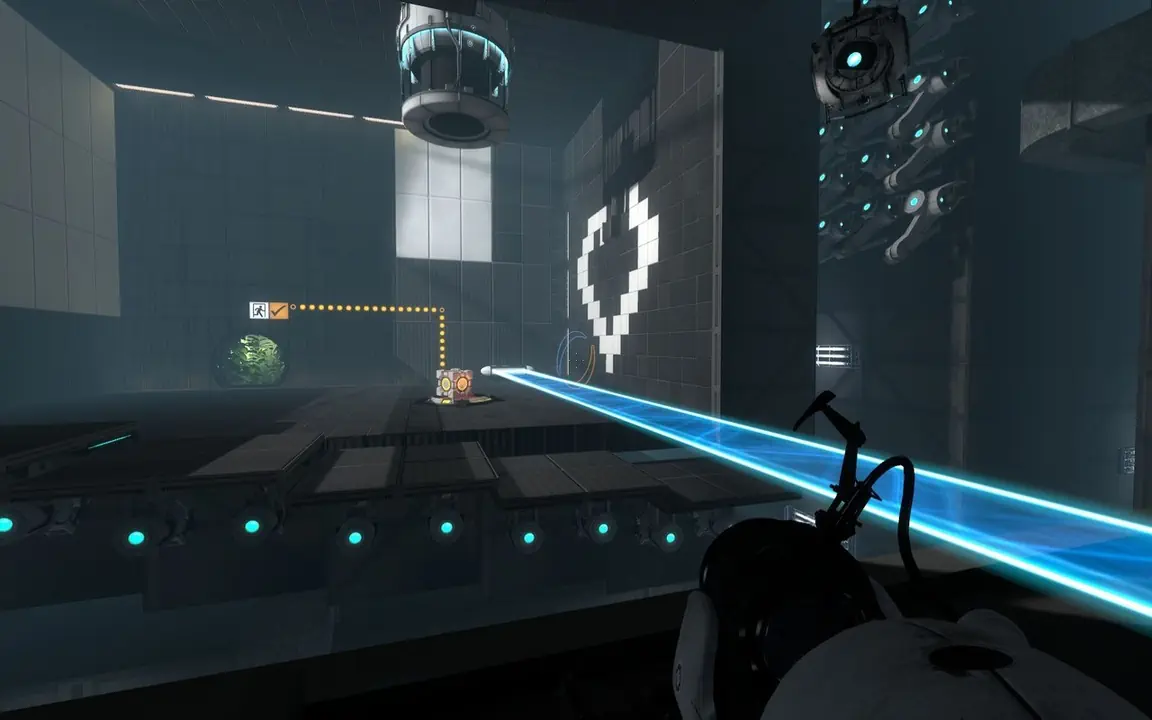
This quadrupled portal capability destroys traditional linear puzzle logic, forcing players to execute intricate combinations where one player redirects an Excursion Funnel while the other utilizes a Hard Light Bridge to catch their partner mid-air. To facilitate this intense level of coordination without relying strictly on external voice channels, the game integrates an in game pinging system that allows players to highlight specific vectors, initiate synchronized countdown timers, and execute expressive gestures to build rapport between the mechanical test subjects.
Final Thoughts
By expanding the simplistic mechanics of its predecessor into a grand, multi layered narrative and mechanical masterpiece, Portal 2 achieves a rare level of design perfection. The synthesis of momentum physics, chemical interaction, and cooperative communication ensures that every test chamber challenges the intellect while rewarding spatial creativity. It stands as an enduring monument to interactive storytelling and puzzle design, proving that true mechanical depth comes from the elegant orchestration of simple rules interacting in complex ways.
What you need to run
Minimum System Requirements
| Component | Specification |
|---|---|
| OS | Windows XP, Vista, 7, 8, or 10 |
| Processor | Intel Core 2 Duo E6600 or AMD Athlon 64 X2 4400+ |
| Memory | 2 GB RAM |
| Graphics | NVIDIA GeForce 8600 GT / ATI Radeon HD 2600 XT |
| Storage | 8 GB available space |
Recommended System Requirements
| Component | Specification |
|---|---|
| OS | Windows 7, 8, or 10 |
| Processor | Intel Core i3+ |
| Memory | 4 GB RAM |
| Graphics | NVIDIA GeForce GTX 750+ / ATI Radeon HD 4850+ |
| Storage | 10 |
Have fun!