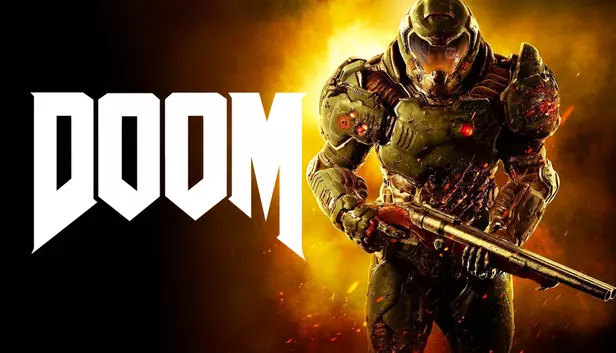
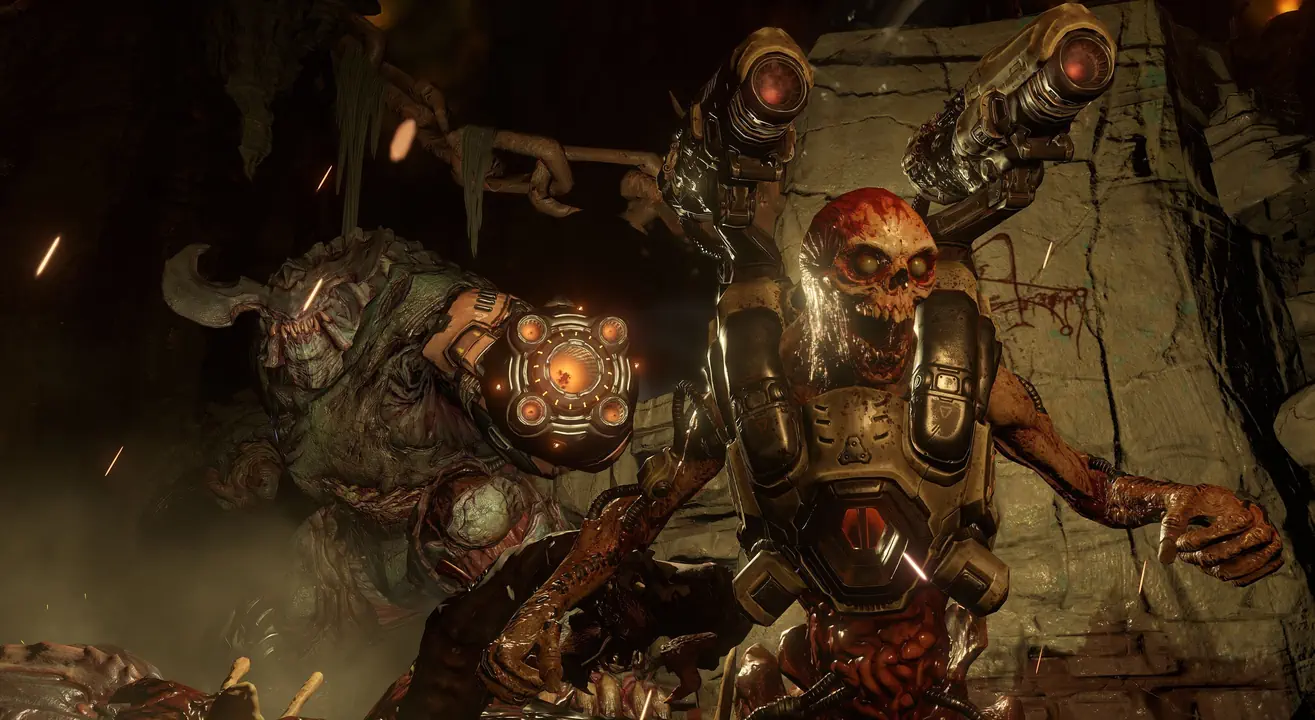
DOOM for PC, released in 2016, represents a monumental shift for the legendary franchise, serving as both a soft reboot and a direct continuation of the overarching lore. The original 1993 masterpiece essentially birthed the first-person shooter genre on MS-DOS, requiring players to navigate command lines just to launch the blood-soaked action. In stark contrast, this modern iteration utilizes the powerhouse id Tech 6 engine to deliver blistering framerates and gorgeous, grotesque visuals that redefine what modern hardware can achieve. It completely strips away the cinematic, slow-paced conventions of contemporary military shooters, returning instead to the frantic, adrenaline-fueled roots established decades prior.
Narrative and Lore Expansion
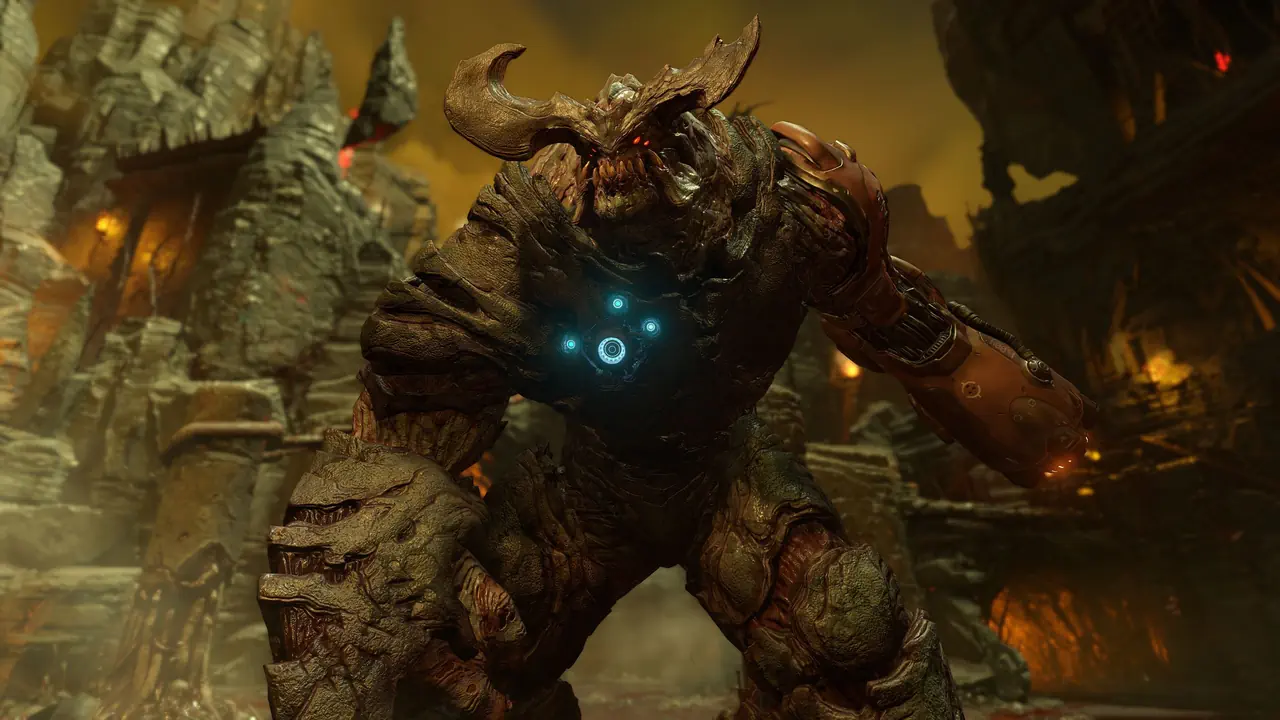
The narrative centers on the iconic Doom Slayer, an ancient warrior awakened from a sarcophagus to find a massive research facility on Mars overrun by demonic hordes. The Union Aerospace Corporation, spearheaded by the cybernetically enhanced Samuel Hayden, has been harvesting Argent Energy directly from Hell to solve Earth’s energy crisis. This dangerous corporate greed backfires spectacularly when a fanatical, high-ranking scientist named Olivia Pierce makes a pact with the dark forces, opening a massive portal that plunges the red planet into absolute chaos. The beauty of the story lies in how it is delivered, as the game cleverly embraces environmental storytelling while allowing the Doom Slayer himself to show utter contempt for corporate monologues, frequently smashing computer screens and communication arrays to get straight back to the slaughter.
Mastery of Push-Forward Combat
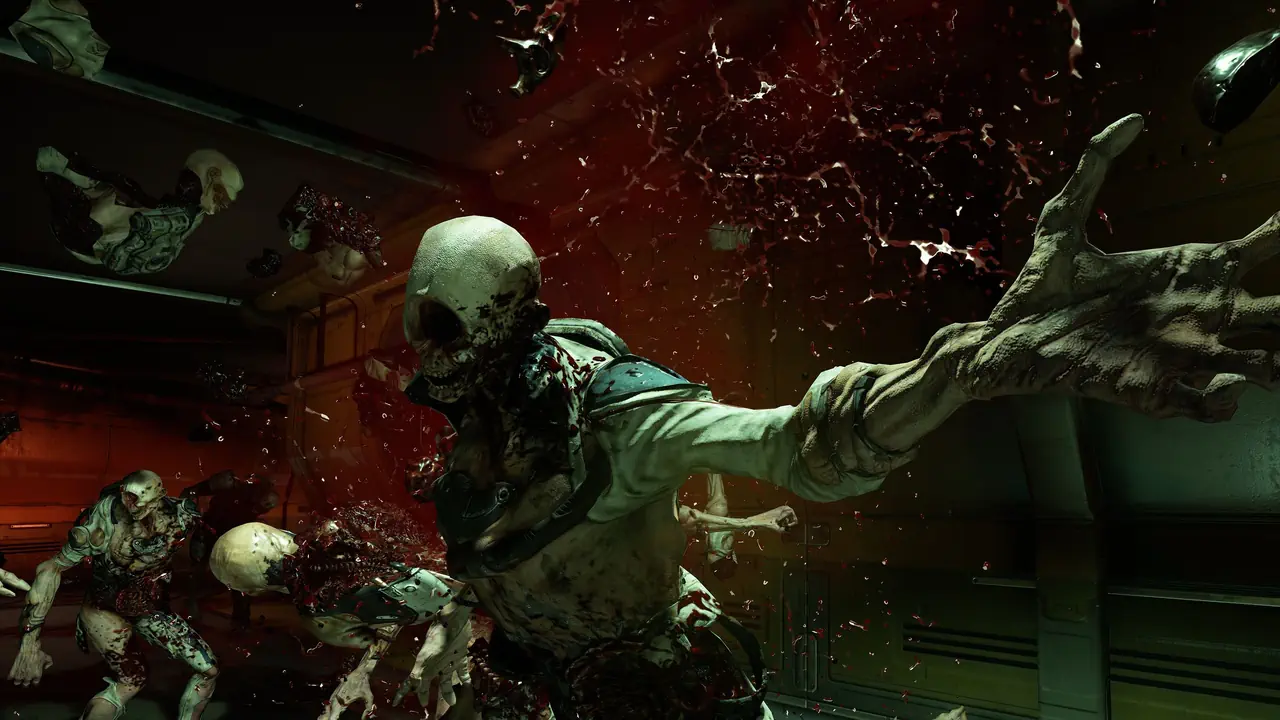
At the absolute core of the gameplay experience is a philosophy known as push-forward combat, a design choice that actively punishes players who attempt to take cover or retreat. Instead of hiding to regenerate health, players must aggressively hunt down enemies, utilizing the brilliant Glory Kill mechanic to execute staggered demons and force them to drop crucial health pickups. This creates a mesmerizing combat loop where aggression equals survival, which is further amplified by the iconic Chainsaw that serves as a strategic tool to slice through foes and force a fountain of ammunition to erupt. The arsenal includes heavily upgraded versions of classic weapons, such as the devastating Super Shotgun and the legendary BFG 9000, each featuring unlockable modifications that alter their functionality and allow for deeply satisfying tactical flexibility during frantic arena encounters.
Exploring the Crimson Depths
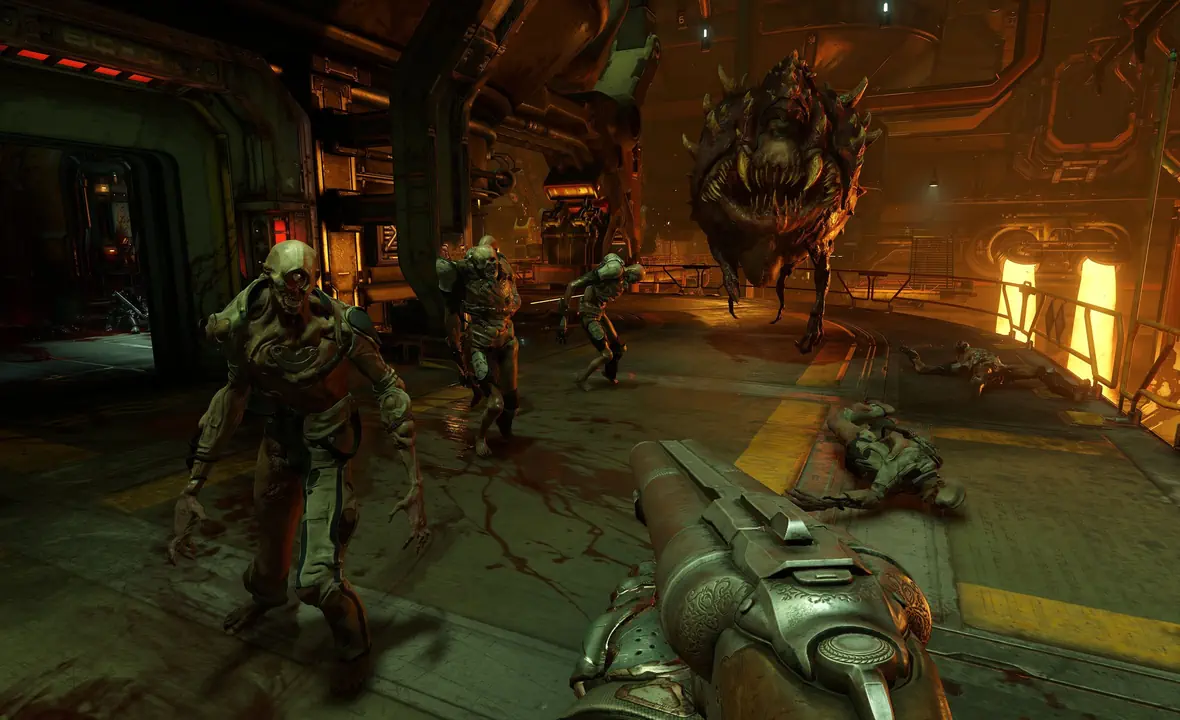
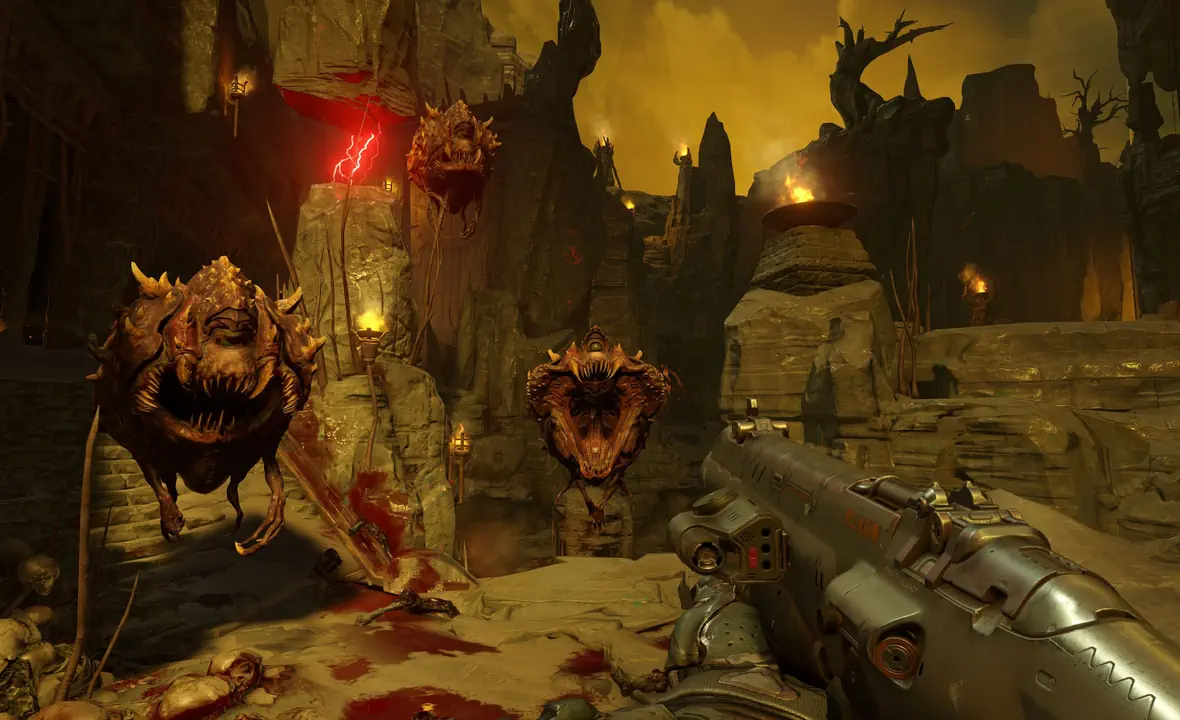
Level design in this reboot is a masterclass in verticality and exploration, moving away from linear corridors toward vast, interconnected arenas that reward clever movement. Progression requires mastering the double-jump and mantle mechanics, enabling the player to dance around projectiles while searching for hidden secrets, elite guard armor tokens, and challenging Rune Trials. Dedicated fans will find incredible nostalgia tucked away in these environments, as every single mission contains a hidden lever that unlocks a classic, pixelated 1993 map segment seamlessly integrated into the modern engine. The campaign spans thirteen distinct levels, transitioning from the sterile, industrial architecture of the UAC facilities to the surreal, gothic horror of the plains of Hell, culminating in massive, multi-phase boss battles against terrifying entities like the Cyberdemon.
Alternative Systems and Creation
Beyond the stellar single-player campaign, the game offers a robust suite of alternative modes designed to extend its longevity well past the initial credits. For the ultimate test of skill, players can brave the terrifying Ultra-Nightmare mode, a brutal difficulty setting featuring permanent death where a single mistake erases the entire save file, leaving a literal helmet on the ground where the player perished. The game also features a dedicated Multiplayer mode, offering fast-paced arena combat with unique twists like player-controlled demons, freeze tag, and traditional deathmatches where movement speed reigns supreme. Additionally, the innovative SnapMap tool provides an accessible yet incredibly deep level creation suite, allowing creators to utilize node-based logic, custom scripting, and modular architecture to build entirely new gameplay experiences that can be shared instantly with the global community.
Final Thoughts
This reboot successfully captures the lightning-in-a-bottle magic of the original titles while injecting modern mechanics that make it feel entirely fresh, relevant, and vital. It stands as a triumphant reminder that first-person shooters do not need to rely on complex cinematic narratives or cover systems to be profoundly engaging, choosing instead to focus on pure, unadulterated gameplay bliss. For anyone seeking a relentless, heavy-metal-fueled journey through the depths of absolute chaos, this masterpiece remains an absolutely essential milestone in gaming history.
What you need to run
Minimum System Requirements
| Component | Specification |
|---|---|
| OS | Windows 7 64-bit / Windows 8.1 64-bit / Windows 10 64-bit |
| Processor | Intel Core i5-2400 / AMD FX-8320 |
| Memory | 8 GB RAM |
| Graphics | NVIDIA GeForce GTX 670 (2 GB) / AMD Radeon HD 7870 (2 GB) |
| Storage | 55 GB available space |
Recommended System Requirements
| Component | Specification |
|---|---|
| OS | Windows 7 64-bit / Windows 8.1 64-bit / Windows 10 64-bit |
| Processor | Intel Core i7-3770 / AMD FX-8350 |
| Memory | 8 GB RAM |
| Graphics | NVIDIA GeForce GTX 970 (4 GB) / AMD Radeon R9 290 (4 GB) |
| Storage | 55 GB available space |
Have fun!