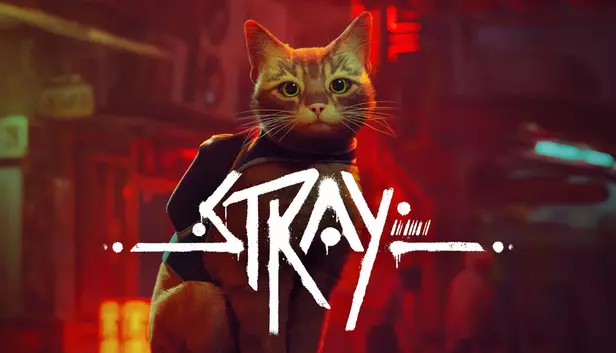
Stray is a deeply atmospheric action-adventure experience, casting players not as a traditional cybernetic mercenary, but as a simple, unnamed feline protagonist. The backdrop of this journey is an oppressive, beautifully decayed metropolis heavily inspired by the historic Kowloon Walled City in Hong Kong. This claustrophobic urban environment thrives on an intense sense of historical mystery, reflecting a dense, vertical labyrinth where humanity has long since vanished, leaving behind an ecosystem of flickering neon signs, forgotten technology, and a distinct undercurrent of rebellion against an unseen isolation. The original Kowloon was demolished in the real world, yet its spirit of packed, rebellious survival lives on in this digital monument to confinement.
The Narrative Genesis and Feline Perspective
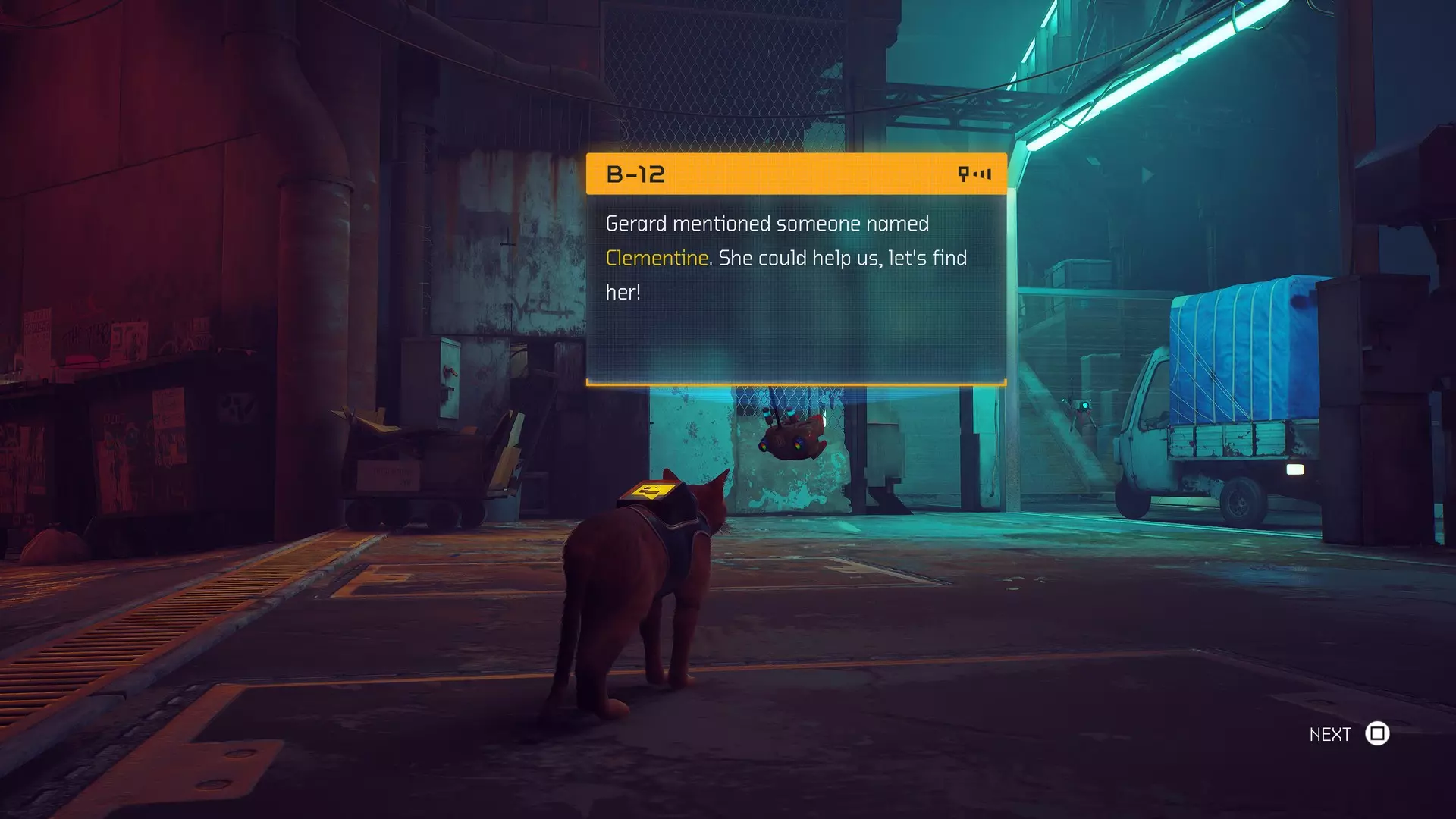
The journey begins with a stark visual contrast, as you start your adventure above ground among a small pack of fellow cats, enjoying a peaceful existence amidst lush, overgrown concrete ruins. A sudden, tragic misstep during a storm plunges our four-legged hero into the depths of the sealed metropolis, separating them from their family and forcing them to navigate a grim, subterranean underbelly. It is within this isolation that you encounter an abandoned cybernetic facility, eventually awakening B-12, an artificial intelligence trapped within a small drone body. This entity once assisted a brilliant human scientist, but its data banks have been severely fractured over the centuries, resulting in a profound case of amnesia. By latching onto the cat via a specialized harness, B-12 becomes your indispensable partner, slowly unlocking memories that reveal the grim fate of the human race while providing crucial guidance through the sprawling maze.
The Mechanical Realism of a Silent Protagonist
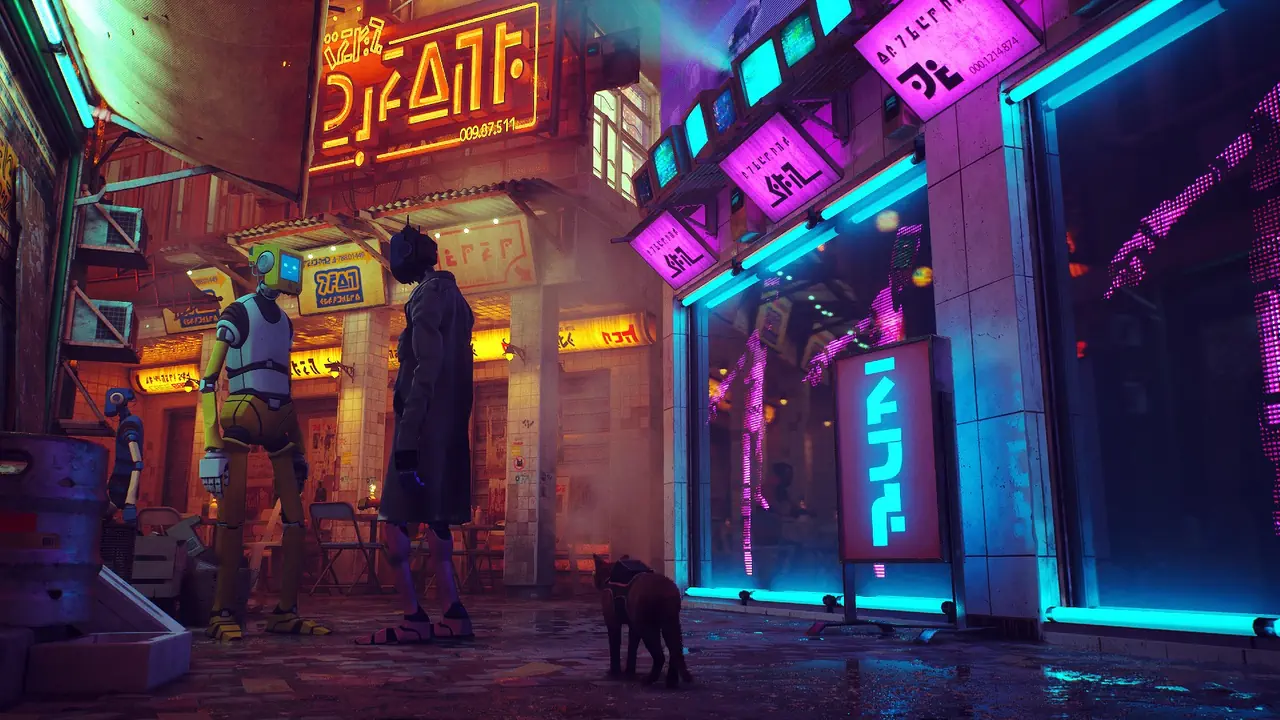
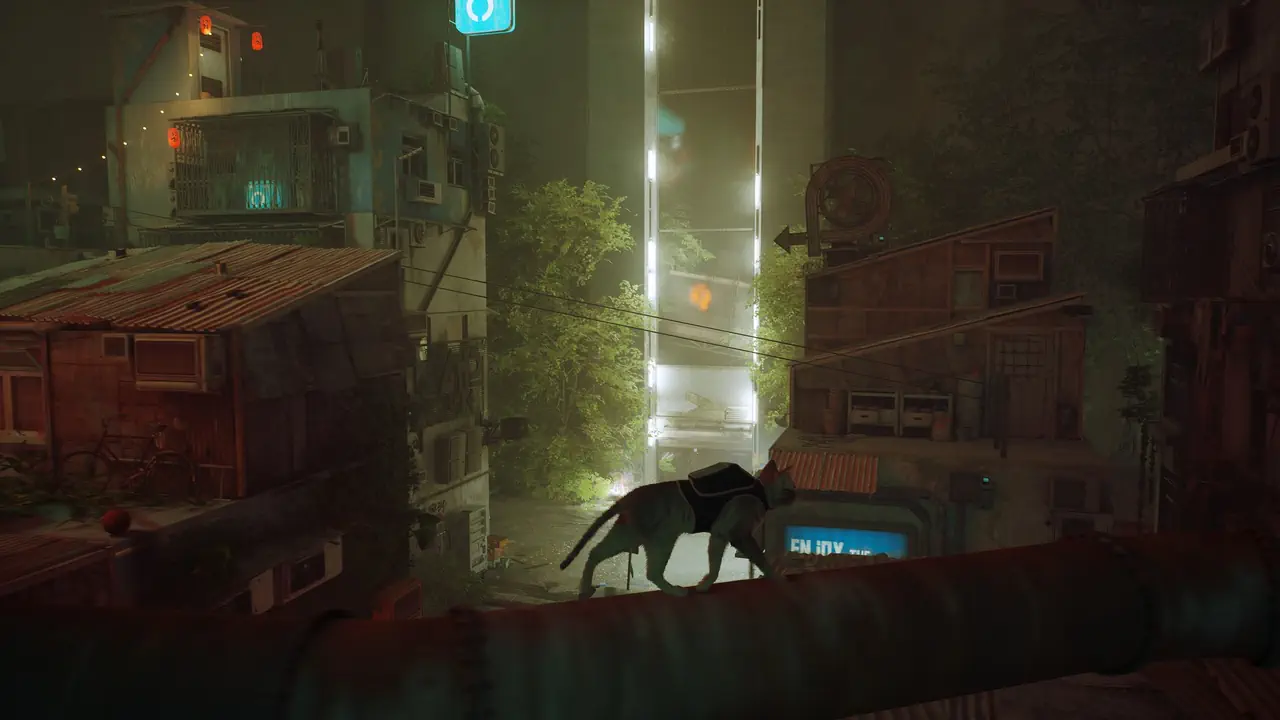
Playing as a cat fundamentally redefines how a player interacts with a digital environment, as there are no traditional weapons, complex skill trees, or armor sets to rely upon. The game relies entirely on natural feline agility and instinct, capturing the exact behavioral nuances of domestic cats, which has even drawn the fascination of real-world pets worldwide. Environmental navigation is inherently vertical, requiring players to leap across rusty air conditioning units, balance on narrow pipes, and squeeze through broken fences. Progression is often tied to inherently mischievous behaviors, such as knocking over paint cans to create new platforms, scratching at heavy carpets to reveal hidden wiring, or shredring window blinds. Even vending machines become vital interaction points, dispensing valuable energy drinks that serve as a rare form of currency within this forgotten society. Exploration is balanced beautifully between linear, tense chase sequences and expansive, open-world hubs where you can freely meow to trigger environmental responses, curl up for a cozy nap, or rub against the legs of lonely mechanical citizens.
The Technical Utility of the Drone Companion
The partnership between the biological protagonist and the mechanical drone represents the core of the game’s puzzle-solving mechanics. Because a cat cannot comprehend human signage or communicate with electronic entities, B-12 serves as an indispensable translator, rendering the strange, digital text of the city into readable language. The drone also functions as a mobile flashlight, illuminating the pitch-black sewers and abandoned apartments where danger lurks. Furthermore, B-12 manages your inventory by digitizing and storing key quest items within its small frame, acting as a lightweight backpack for the cat. When facing technological barriers, the drone utilizes its advanced hacking capabilities, opening locked security gates, overriding ancient terminals, and solving intricate environmental puzzles that would otherwise block your path to freedom.
The Companions and the Cybernetic Ecosystem
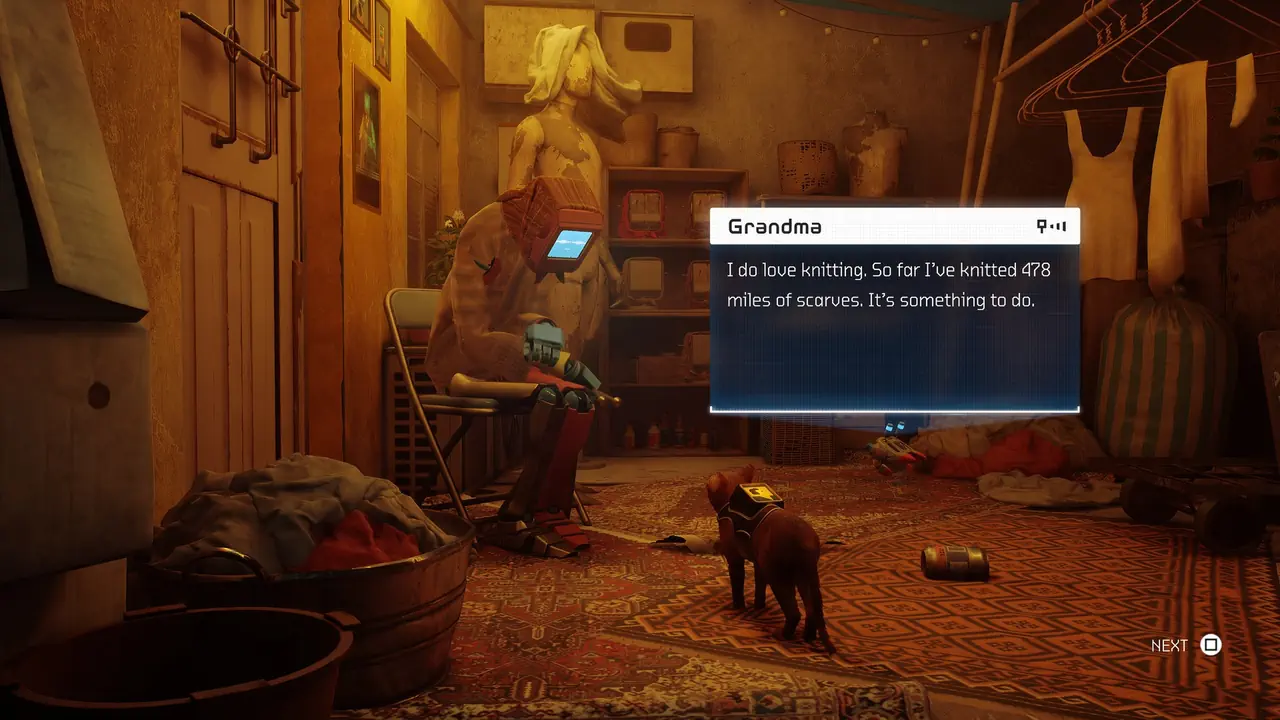
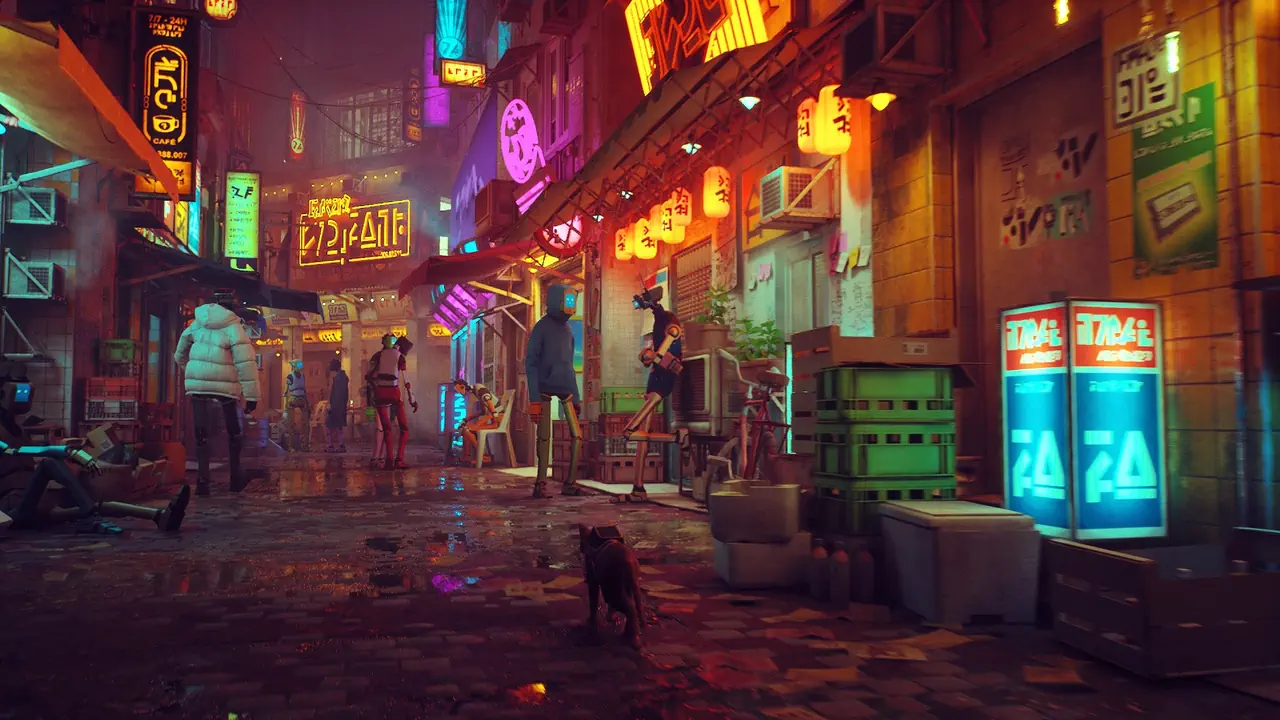
In the absence of humanity, the city is populated by the Companions, a society of self-aware robots who originally served as domestic and industrial labor. Over hundreds of years, these machines have developed a fascinating mimicry of human culture, adopting clothes, fabricating hairstyles out of tangled wires, and expressing deeply human emotions like fear, loneliness, and artistic passion. You encounter unique individuals like Morusque, a street musician who will gladly strum melodies on a makeshift guitar if you scour the alleys for discarded sheet music. Beyond individual eccentricities, a grander narrative unfolds through the Outsiders, a dedicated faction of rebellious robots determined to break through the sealed ceiling of the city to see the true sky. Assisting these dreamers requires navigating a complex web of favors, collecting commemorative badges to pin to your vest, and breathing hope into a society that has spent centuries trapped in perpetual artificial night.
The Twin Perils of the Deep City
Safety is a luxury in the lower levels, primarily due to the terrifying presence of the Zurks. These ravenous, biological entities evolved from a mutated bacteria originally engineered to consume garbage, but they have since transformed into a swarming plague that devours both organic flesh and synthetic metal. Escaping a horde of Zurks requires frantic sprinting and precise pathfinding, though later chapters allow B-12 to fight back temporarily using the Defluxor, a specialized UV light weapon that disintegrates the creatures but suffers from severe overheating issues. Complementing this biological horror are the Sentinels, cold, calculating security drones left behind by the city’s ancient corporate authorities. These airborne enforcers patrol the neon streets with lethal efficiency, forcing the player to utilize stealth, hide in cardboard boxes, and carefully observe colored sight lines to avoid instant vaporization.
Final Thoughts
Ultimately, Stray succeeds because it juxtaposes the warmth of an innocent animal against the cold, melancholic backdrop of a post-apocalyptic dystopia. The bond formed between the silent cat and the melancholic B-12 anchors the narrative, turning a simple quest for home into a grand preservation of human legacy. Through gorgeous environmental design, haunting synthesisers, and a deep respect for its animal star, the game provides an unforgettable exploration of what it truly means to be alive, leaving an indelible mark on anyone who steps into its forgotten world.
What you need to run
Minimum System Requirements
| Component | Specification |
|---|---|
| OS | Windows 10 (64-bit) |
| Processor | Intel Core i5-2300 | AMD FX-6350 |
| Memory | 8 GB RAM |
| Graphics | NVIDIA GeForce GTX 650 Ti, 2 GB | AMD Radeon R7 360, 2 GB |
| DirectX | Version 12 |
| Storage | 10 GB available space |
Recommended System Requirements
| Component | Specification |
|---|---|
| OS | Windows 10 (64-bit) |
| Processor | Intel Core i7-7700 | AMD Ryzen 7 3700X |
| Memory | 16 GB RAM |
| Graphics | NVIDIA GeForce GTX 1060, 6 GB | AMD Radeon RX Vega 56, 8 GB |
| DirectX | Version 12 |
| Storage | 10 GB available space |
Have fun!