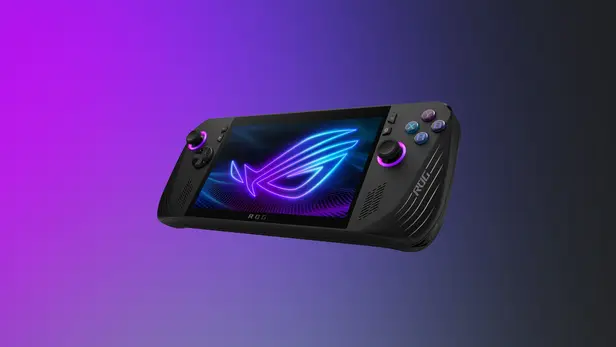
The ASUS ROG Ally X represents a significant generational mid-cycle refinement, correcting almost every engineering flaw of the original model while boosting system capabilities for modern, high-fidelity gaming.
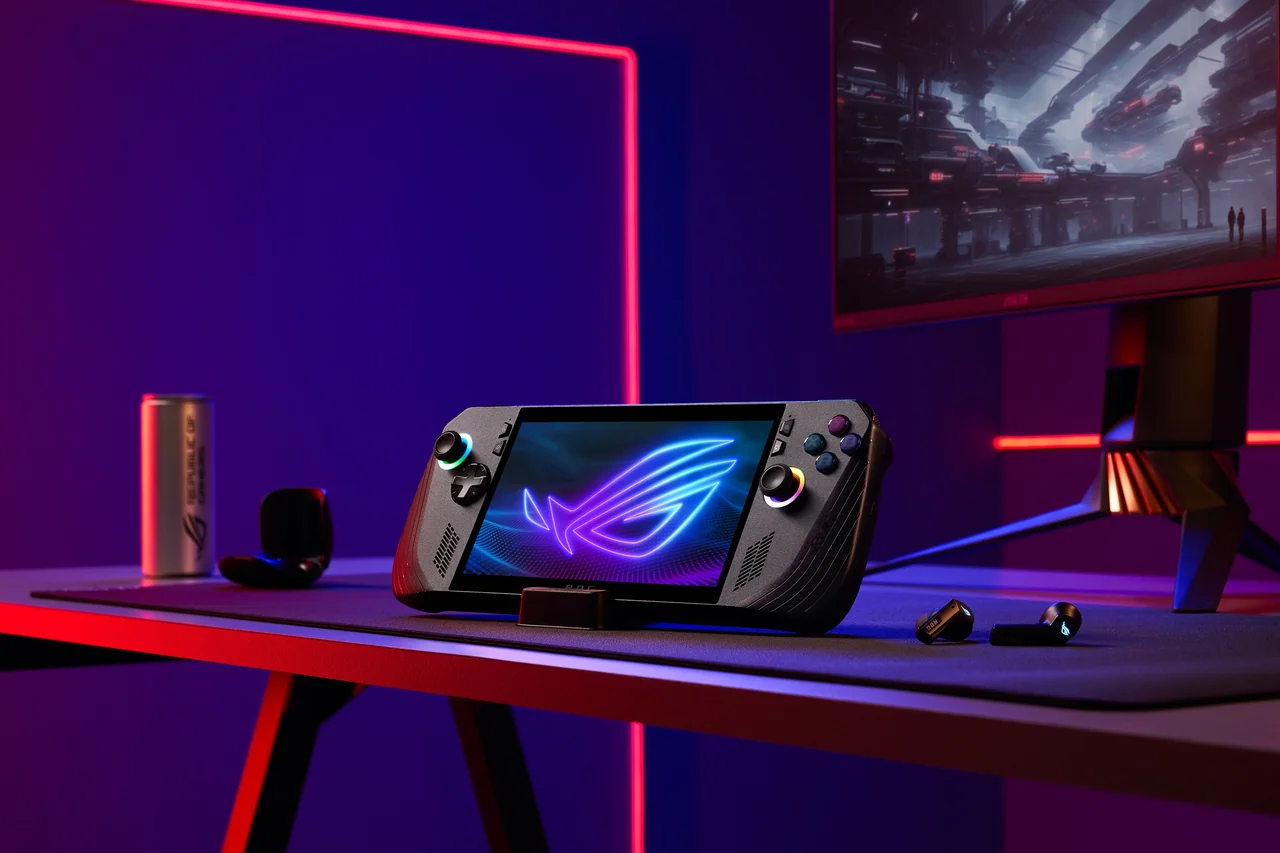
Architecture and Memory Upgrades
The core processing unit remains the AMD Ryzen Z1 Extreme, which features eight cores and sixteen threads based on the Zen 4 architecture, alongside twelve RDNA 3 compute units. The true performance evolution stems from the system memory sub-system, which expands from 16GB of LPDDR5 running at 6400 MT/s to 24GB of LPDDR5X operating at a blistering 7500 MT/s.
This capacity shift directly resolves the memory allocation dilemma inherent to modern Accelerated Processing Units, or APUs. On the original model, allocating 8GB of system memory to VRAM left only 8GB for the entire Windows 11 operating system, causing major stutters, texture streaming issues, and outright game crashes. With 24GB available, users can comfortably allocate 8GB of dedicated VRAM to the graphics processor, leaving a complete 16GB pool for system operations. This architectural headroom substantially stabilizes frame pacing, improves 1% low framerates, and permits smoother asset streaming in heavy open-world titles.
Comparative Specifications
| Hardware Attribute | Original ROG Ally | Upgraded ROG Ally X |
|---|---|---|
| System Memory | 16GB LPDDR5 at 6400 MT/s | 24GB LPDDR5X at 7500 MT/s |
| Battery Capacity | 40 Watt-hours (Wh) | 80 Watt-hours (Wh) |
| Storage Interface | M.2 2230 NVMe PCIe 4.0 | M.2 2280 NVMe PCIe 4.0 |
| Expansion Slot | Proprietary XG Mobile Port | Universal USB4 (40 Gbps) |
| Chassis Weight | 608 grams | 678 grams |
| Analogue Sticks | Standard Potentiometer | High-durability Stiffer Springs |
Ergonomics and Control Overhaul
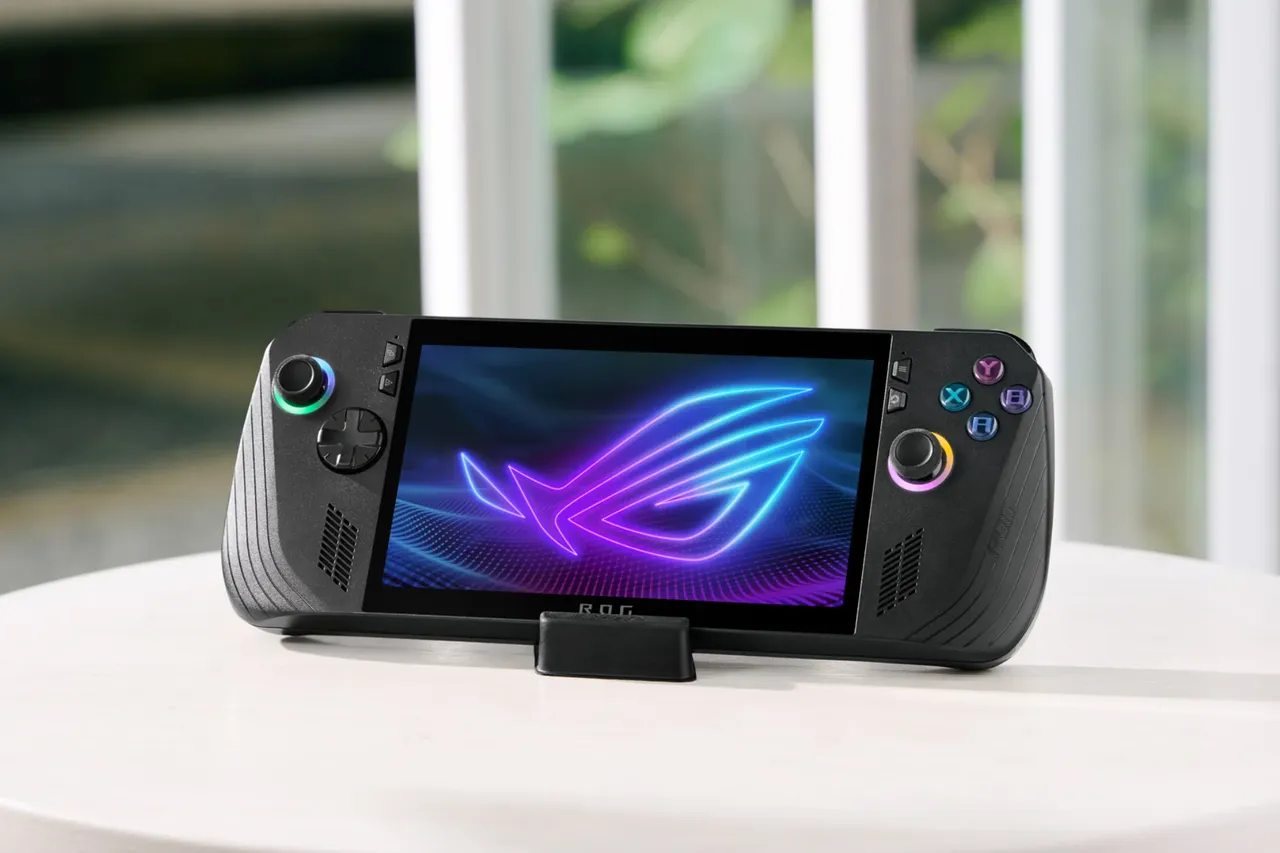
The physical interaction points have undergone a thorough revision to mitigate wrist strain and improve tactile feedback during competitive play.
- Chassis Grips: The handgrips are notably taller and more substantial, distributing the physical weight deeper into the palms instead of forcing the fingers to pinch the device;
- Joystick Resilience: The analog modules are fitted with stiffer springs rated for a lifespan of five million rotations, which eliminates the loose, floaty sensation found in the first generation;
- D-Pad Accuracy: The directional pad features a rigid, cross-shaped pivot point that reduces accidental diagonal inputs, which is a major benefit for complex command execution in fighting games;
- Macro Buttons: The rear custom buttons are drastically reduced in surface area, moving outward toward the inner edge of the grips to prevent unintended finger activation during intense gameplay sequences.

Thermals and Internal Layout
The internal architecture has been redesigned from the ground up, focusing heavily on component safety and structural efficiency.
The image above highlights the monumental engineering shift, where the massive, dark 80Wh battery occupies nearly the entire lower half of the chassis. To accommodate this block without overheating the surrounding electronics, ASUS implemented 0.15mm ultra-thin fan blades. These specialized fans improve total volumetric airflow by roughly ten percent, pulling heat away from the main mainboard effectively.
Crucially, the microSD card slot has been completely relocated. In the previous model, the reader sat adjacent to the primary copper heatsink exhaust vents, subjecting flash cards to extreme thermal stress and causing widespread hardware failures. The updated layout positions the slot far away from the primary thermal exit paths, ensuring safe operation during prolonged, high-wattage gaming sessions.
Power Scaling and Battery Realities
Doubling the internal battery volume to 80Wh transforms the device from a wall-tethered machine into a truly portable gaming console. The firmware power profiles have also been shifted upward to match the superior thermal headroom.
- Quiet Mode: Operates at 13 Watts, which provides silent operation for indie titles and emulation pipelines;
- Performance Mode: Scales at 17 Watts, which offers a sweet spot for running modern titles at stable framerates;
- Turbo Mode: Configured at 25 Watts on battery and peaks at 30 Watts when connected to standard wall power.
At a steady 15 to 17 Watt power envelope, you can expect between three to over four hours of continuous gameplay, a massive leap over the original model, which frequently depleted itself in under ninety minutes. The integration of 65W Power Delivery fast charging ensures the massive cell can recover half its total charge capacity in just thirty minutes of downtime.
Software Expansion: Armoury Crate SE 1.5
The custom software shell running on top of Windows 11 has transitioned into a cleaner, more reliable command center. Armoury Crate SE 1.5 functions as a centralized frontend launcher, scanning systems to aggregate titles from platforms like Steam, Xbox Game Pass, Epic Games, and GOG.
The user interface supports deep personalization, enabling individual game profiles that automatically apply customized controller mappings, specific TDP thresholds, and lighting configurations upon boot. Performance overlays are more customizable, allowing players to track real-time framerates, active power draw, thermal metrics, and remaining battery life without obstructing the game viewport.
Final Thoughts
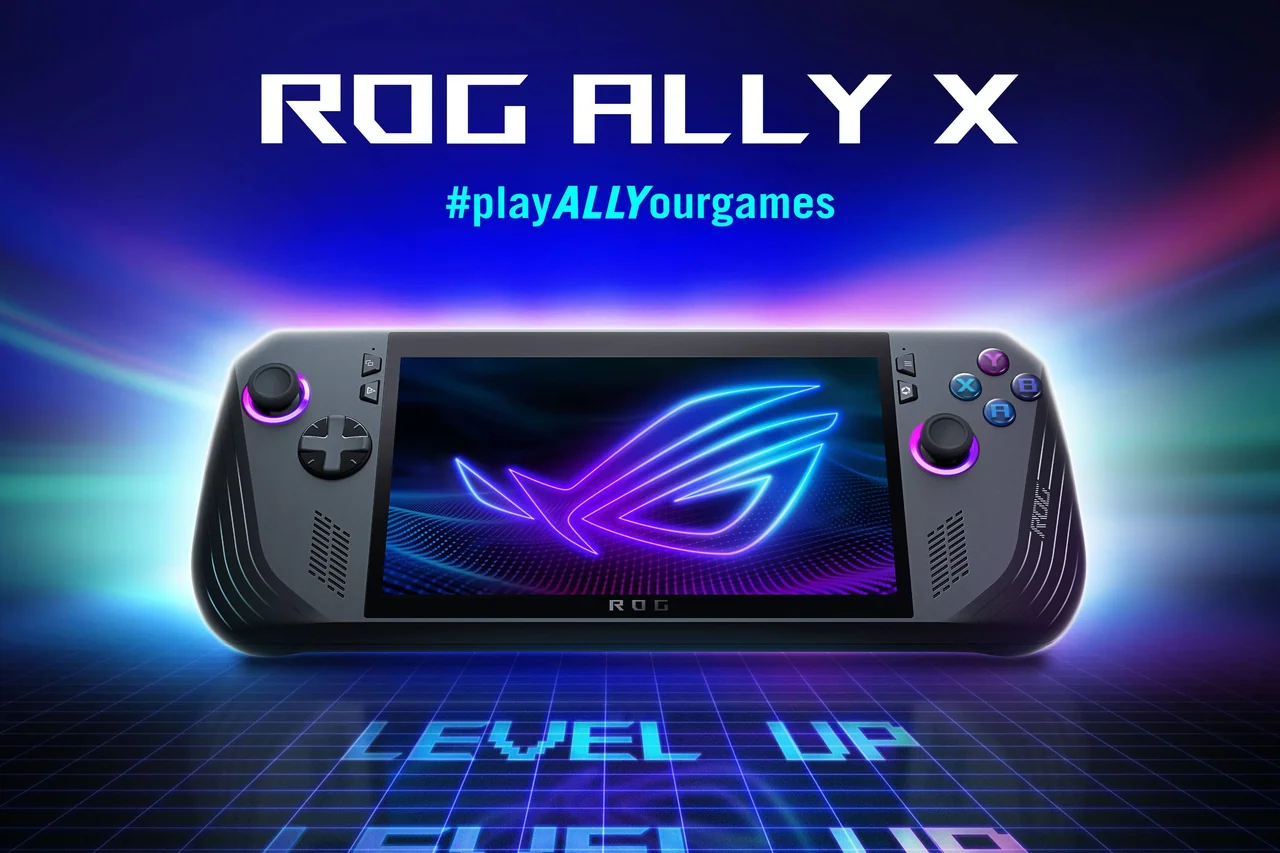
The ASUS ROG Ally X avoids the pitfalls of standard mid-generation updates by implementing practical, user-driven changes. By discarding the restrictive, proprietary XG Mobile port in favor of an open USB4 standard, the device becomes universally compatible with standard external graphics enclosures. While the extra battery volume adds a nominal amount of thickness and seventy grams of physical weight, the resulting performance stability, reliable card reader, and extended operational endurance establish it as a premier standard for enthusiast handheld hardware.
Full Specs
| Specification | Details |
|---|---|
| Operating System | Windows 11 Home |
| Processor | CPU: AMD Ryzen™ Z1 Extreme Processor (“Zen4” architecture with 4nm process, 8-core /16-threads, 24MB total cache, up to 5.10 Ghz boost) GPU: AMD Radeon™ Graphics (AMD RDNA™ 3, 12 CUs, up to 2.7 GHz, up to 8.6 Teraflops) TDP: 9-30W |
| Display | 7-inch FHD (1920 x 1080) 16:9 IPS-level sRGB: 100%, Adobe: 75.35% Gorilla® Glass Victus™, Touch Screen, 120Hz, 7ms, 500nits, FreeSync Premium |
| Memory | 12GB*2 LPDDR5 on board, Support dual channel memory |
| Storage | 1TB PCIe® 4.0 NVMe™ M.2 SSD (2280) |
| I/O Ports | 1x 3.5mm Combo Audio Jack 1x USB 3.2 Gen 2 Type-C support DisplayPort™ / power delivery 1x Type C support USB 4 (Thunderbolt™ 4 compliance, DisplayPort™ 1.4 with Freesync support, Power Delivery 3.0) 1x UHS-II microSD card reader (supports SD, SDXC and SDHC) |
| Control and Input | A B X Y buttons D-pad L & R Hall Effect analog triggers L & R bumpers View button Menu button Command Center button Armoury Crate button 2 x assignable grip buttons Thumbsticks: 2 x full-size analog sticks Haptics: HD haptics Gyro: 6-Axis IMU |
| Audio | AI noise-canceling technology Hi-Res certification (for headphone) Smart Amp Technology Dolby Atmos Built-in array microphone 2-speaker system with Smart Amplifier Technology |
| Network and Communication | Wi-Fi 6E(802.11ax) (Triple band) 2*2 + Bluetooth® 5.2 |
| Battery | 80WHrs, 4S1P, 4-cell Li-ion |
| Power Supply | TYPE-C, 65W AC Adapter |
| AURA SYNC | Yes |
| Weight | 678 g (1.49 lbs) |
| Dimensions (W x D x H) | 28.0 x 11.1 x 2.47 ~ 3.69 cm (11.02″ x 4.37″ x 0.97″ ~ 1.45″) |
| Xbox Game Pass | Xbox Game Pass Ultimate_3 months |
| Security | Built-in Fingerprint Sensor, Microsoft Pluton security processor |
Have fun!